

Effective storage solutions for businesses are much more than just a place to stash extra stuff; they're a strategic asset that can unlock real operational agility and growth. For countless UK businesses, trying to manage inventory, equipment, or archives in a cramped main premises quickly creates logistical headaches that can stop progress in its tracks.
Why Smart Storage Is a Business Superpower
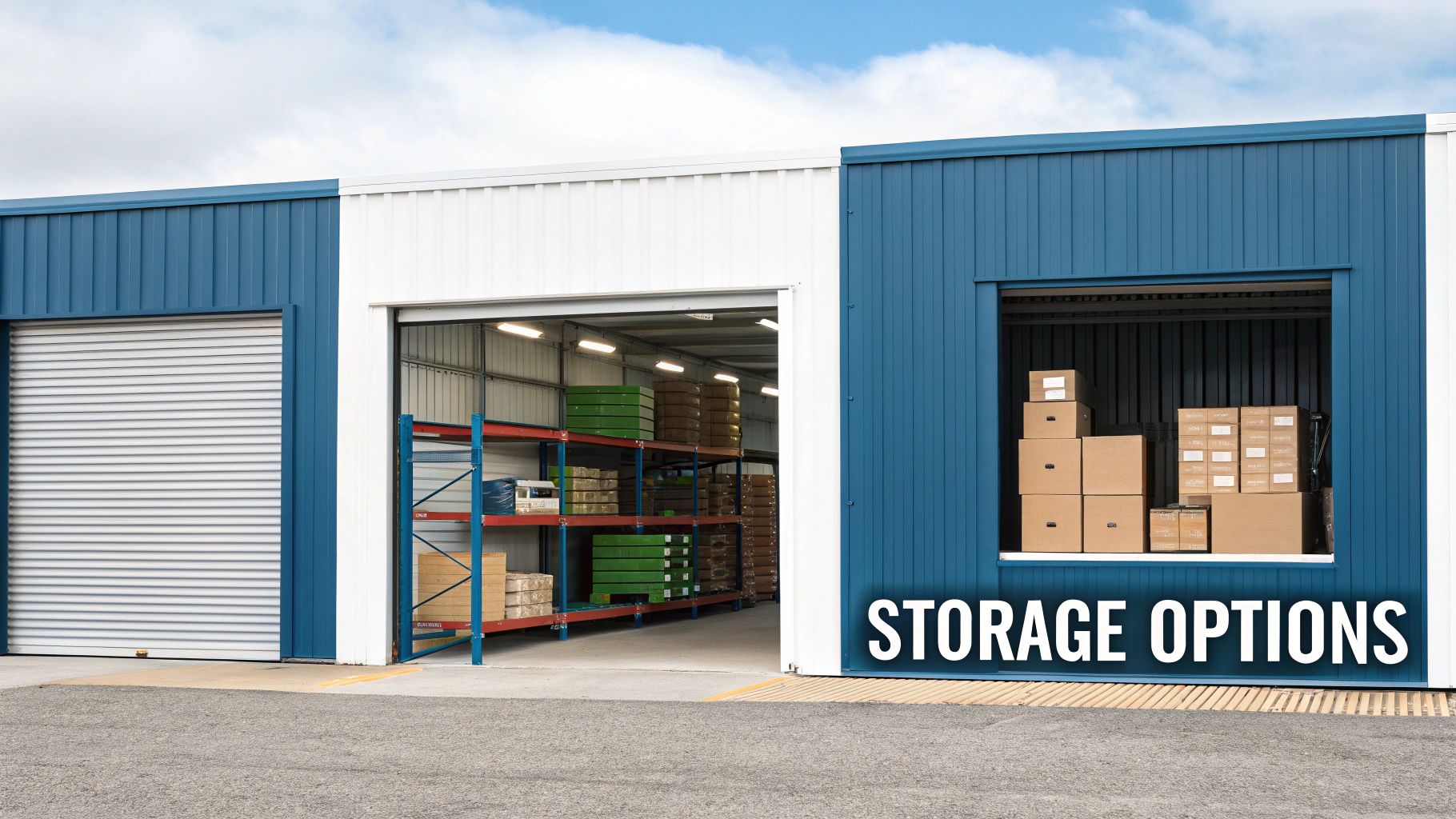
Running out of room is one of the most common growing pains for businesses all over the UK. Whether you’re an e-commerce brand with overflowing stock or a tradesperson with an ever-expanding toolkit, the lack of physical space often becomes a serious hurdle. But looking at storage as just another expense is a missed opportunity.
Think of it instead as a dynamic operational hub. It gives you the flexibility to scale up or down with seasonal demand, supports expansion without locking you into a long, expensive commercial lease, and helps you keep your main workspace professional and organised. This simple change in mindset transforms a storage unit from a cost centre into a powerful tool for efficiency.
A Growing Trend in UK Business Operations
This reliance on external storage isn't just a hunch; it's a sector that's booming. The UK self-storage industry recently hit a milestone, with its annual turnover surging past the £1.2 billion mark for the very first time.
What’s driving this growth? Businesses are catching on. In fact, 24% of users are now running their enterprises directly from their storage units. It's a clear signal that companies are using storage as an active, integrated part of their workflow, not just a passive holding bay. It’s about creating a secure and accessible extension of your business.
Integrating Physical and Digital Assets
To get the most out of your space, it's smart to think about how your physical items connect with your digital world. Following IT asset management best practices can help you streamline inventory tracking and align your physical and digital storage strategies. When you manage your stock and your records in a cohesive way, the whole operation runs more smoothly.
By thinking of storage as an operational advantage rather than a simple necessity, businesses can unlock new levels of efficiency, reduce overheads, and gain a crucial edge in a competitive market.
Finding the Right Fit: A Guide to Business Storage Solutions
Choosing the right storage for your business can feel a bit overwhelming at first. There are a lot of options out there, and the last thing you want is to pick a space that doesn't quite work. Let's break down the main types of storage solutions for businesses to help you find the perfect match for what you do.
Think of traditional self-storage units as an extension of your office or stockroom. They're typically inside a larger building, offering a clean, secure, and dry environment. This makes them ideal for things that need protecting from the British weather—think retail inventory, marketing materials, or company equipment. It’s a reliable choice for a whole range of business assets.
Container storage, on the other hand, is all about robust, drive-up convenience. These are the large steel containers you often see at ground level, and they're a game-changer for businesses that need to load and unload heavy or bulky items straight from a van. A landscape gardener dropping off machinery or a builder securing materials for a job—that’s where these units really shine.
Matching Storage to Your Business Needs
So, when does a standard unit make more sense than a container? It often boils down to how you need to access your goods and what you're actually storing. But for some items, you need more than just a locked door; you need a specialised environment.
Take climate-controlled units, for example. These are absolutely vital if you're storing anything sensitive to temperature or humidity. Big swings in either can wreck electronics, warp wooden furniture, or ruin important documents. For businesses with stock like pharmaceuticals or cosmetics, a stable environment isn't a luxury—it’s an insurance policy against costly damage from damp and mould.
And then there's the paperwork. Many businesses have a legal duty to keep records for years, but that doesn't mean filing cabinets should take over your office. Specialised document storage services are designed for exactly this. They offer more than just a box; they provide secure, organised archiving that keeps you compliant and frees up valuable workspace. You can learn more about how storage units can benefit office environments and help you reclaim your space.
Why Container Storage is on the Rise
You’ve probably noticed more container-based storage sites popping up, and for good reason. Their sheer flexibility and value for money have made them a huge hit in the UK, especially for businesses that need no-fuss, easy-access space.
In fact, container storage is a massive part of the industry now, accounting for 39% of all 2,915 self-storage sites in the UK. With 1,135 dedicated container locations, their expansion into rural and semi-rural areas shows just how much businesses of all kinds have come to rely on them. It’s clear that companies are looking for practical solutions that can grow with them.
The flowchart below can help you map out how storage fits into your own growth strategy.
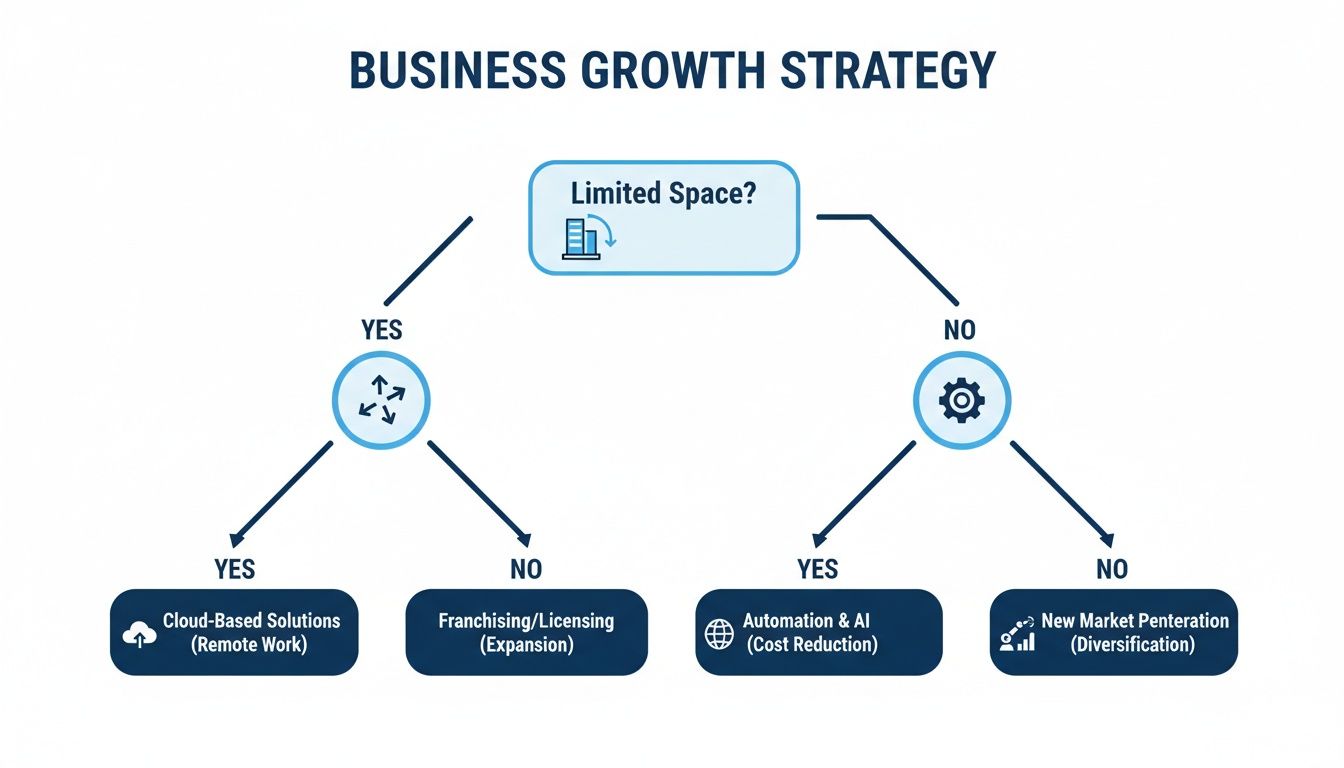
It's a simple visual guide that shows how challenges like a lack of space can be solved with a smart storage plan, paving the way for greater efficiency.
Comparing Business Storage Solutions at a Glance
To make the decision a little easier, we've put together a simple comparison table. This breaks down the primary storage options to help you see which one aligns best with your business goals.
| Storage Type | Best For | Key Advantages | Typical Cost Bracket |
|---|---|---|---|
| Traditional Self-Storage | Sensitive stock, equipment, files, and general business overflow. | Indoor, secure, protection from elements, variety of unit sizes. | ££ – £££ |
| Container Storage | Bulky goods, machinery, trade tools, and large-scale inventory. | Drive-up access, robust security, cost-effective for larger spaces. | £ – ££ |
| Climate-Controlled Units | Electronics, documents, pharmaceuticals, wood furniture, archives. | Stable temperature and humidity, prevents damage from damp/mould. | £££ – ££££ |
| Document Archiving | Legally required records, sensitive files, long-term paper storage. | High-security, compliance-focused, frees up office space. | ££ – £££ |
This table gives you a quick snapshot, but remember to weigh these factors against your daily operational needs.
Expanding Your Storage Capabilities
For businesses handling a high volume of palletised goods, the inside of your unit is just as important as the unit itself. To really make the most of a larger space, it’s worth looking into solutions like pallet racking systems. This is the best way to use vertical space, keep your inventory organised, and ensure your team can get to what they need, when they need it.
The best storage solution isn’t just about finding spare room; it’s about choosing a specific tool that aligns with your operational flow, security requirements, and long-term business goals.
Ultimately, by understanding these core options, you're in a much better position to make the right choice. Take a moment to think about what you’re storing, how often you’ll need to access it, and whether it has any special requirements. That's how you find a solution that doesn't just hold your things, but actively helps your business run smoother.
Choosing a Storage Partner You Can Trust
When you're choosing a storage provider, you’re doing more than just renting space. You're selecting a partner who will be responsible for your valuable stock, critical equipment, or essential documents. It’s a decision that directly impacts your operational efficiency and the security of your business assets.
It's easy to get sidetracked by headline prices, but the real value lies in the details. A truly reliable partner offers robust security that lets you sleep at night, flexible access that fits your real-world schedule, and transparent contracts that won't trip you up later. Before you sign on the dotted line, it pays to do your homework.
Vetting Security Protocols
The absolute foundation of any good storage partnership is security. Your assets are the lifeblood of your business, so the facility's commitment to protecting them has to be rock-solid. A flimsy padlock and a rusty gate just won't cut it.
When you visit a potential site, look for signs of a serious, multi-layered security system. Are there high-definition CCTV cameras covering all the important spots—entrances, corridors, and loading bays? Is the perimeter properly secured with sturdy fencing and an electronic gate? The best facilities also have staff on-site during opening hours, which adds an invaluable human element to the security setup.
Here’s what to look for on your security checklist:
- Comprehensive CCTV Coverage: Make sure cameras are modern, well-positioned, and actively recording 24/7.
- Controlled Access Systems: Look for electronic key-fob or code systems that log every entry and exit, creating a clear audit trail.
- Individual Unit Security: Your unit should have a high-quality lock, and you should be the only person with the key.
- On-Site Personnel: Staff aren’t just there for customer service; their presence is a huge deterrent to any would-be intruders.
Accessibility and Operational Fit
World-class security doesn't mean much if you can't get to your things when you need them. Business rarely sticks to a neat 9-to-5 schedule, especially for e-commerce brands, event planners, or tradespeople. Finding a provider that offers 24/7 access can be a complete game-changer, letting you grab stock for an early start or drop off equipment after a late finish.
Think about how a storage unit will actually fit into your daily workflow. Will you be loading and unloading heavy items directly from a van? If so, drive-up access is non-negotiable. And don't underestimate the power of location. Choosing convenient business storage near me can save you countless hours and fuel costs, turning your unit into a seamless extension of your business, not a logistical headache.
Understanding Contracts and Insurance
Finally, let's talk paperwork. The best facilities have contracts that are as clear and flexible as their access hours. You should be wary of any provider trying to lock you into a rigid, long-term lease. Your business needs the freedom to grow, shrink, or pivot, and your storage agreement should support that.
A flexible contract is a sign that a storage provider understands the dynamic nature of modern business and is prepared to support your growth, not hinder it.
Insurance is the other critical piece of the puzzle. A common mistake is assuming your main business policy automatically covers goods stored elsewhere—it often doesn't. Reputable storage companies will require proof of insurance and can usually offer specialised, affordable cover. This protects your assets against the unexpected, like fire, theft, or flood damage. Always confirm the insurance requirements and make sure your cover matches the value of what you're storing. It’s the final step in securing your assets and building a partnership you can genuinely rely on.
How Real UK Businesses Win with Smart Storage
It’s one thing to talk about features and benefits, but the real measure of any business tool is how it actually performs on the ground. Let's move away from the theory and look at how different UK businesses are using smart storage to get real results, day in and day out. These stories show just how a simple storage unit can become a powerful part of their operations.
For a lot of companies, the right storage isn't just about clearing out a cluttered office. It's about unlocking new potential. It's the key that allows them to say "yes" to a great deal on bulk stock, handle seasonal rushes without descending into chaos, and keep their main workspace professional and productive. It’s this kind of flexibility that gives them a genuine edge over the competition.
The E-commerce Retailer Scaling with Finesse
Picture a growing online clothing boutique based out of Leeds. A year ago, they were drowning in stock. Boxes of t-shirts and dresses were piled high in the owner’s spare room, with the overflow spilling into the garage. Every new delivery for the upcoming season just added to the logistical nightmare, making it a slow, frustrating process to get orders out the door.
They took the plunge and rented a medium-sized self-storage unit. Almost overnight, they had their own mini-fulfilment centre. They put up some basic shelving, organised everything by size and style, and even set up a proper packing station. The change was immediate.
- Operational Efficiency: They were picking and packing orders in half the time.
- Scalability: They could order in bulk for the Christmas rush with confidence, knowing they had the space.
- Professionalism: The owner got their home back, and the entire operation felt more organised and under control.
This one simple decision allowed the business to grow without the usual growing pains, turning a huge operational headache into a smooth, efficient process.
By thinking of their storage unit as a small-scale logistics hub, the retailer started managing their inventory like a much bigger company, but without the crippling cost of a traditional warehouse lease.
The Skilled Tradesperson Reclaiming Their Evenings
Now, think of an electrician in Bristol. For years, his van was a chaotic mess of tools, cable reels, and fittings. His garage at home? Completely out of action, overflowing with surplus materials. Each morning started with a frantic search for the right gear, wasting valuable time before he’d even started his first job.
Renting a secure, drive-up container storage unit changed his entire routine. It became the central depot for all his equipment and stock. He could drive his van right up to the door, load up exactly what he needed for the day's jobs, and then drop off any leftovers in the evening.
The impact was huge. His van is now neat and carries only what’s essential, which even helps with fuel costs and vehicle wear. But more importantly, his home is his home again, not a makeshift worksite. That clear line between work and personal life has done wonders for his well-being and his professional image.
The Professional Services Firm Ensuring Compliance
Finally, let's look at a small law firm in Slough. Like many professional services, they have a legal duty to hold onto client files for years. These paper archives were slowly but surely taking over their expensive office space, with filing cabinets creeping into meeting rooms and common areas. It wasn't just inefficient; it was also a security concern.
They found a provider offering specialised document archiving services. This was more than just renting an empty room. It was a complete solution that included secure collection of the files, cataloguing everything, and storing it all in a climate-controlled unit designed to protect paper from damage.
This strategic move paid off in several ways:
- Space Optimisation: An entire room was cleared in their office, which they promptly turned into a much-needed client consultation space.
- Enhanced Security and Compliance: The files are now held in a facility with far better security, helping them easily meet their data protection and legal obligations.
- Cost-Effectiveness: The price of the archiving service was a fraction of the value of the prime office space it freed up.
These real-world examples make it clear that storage solutions for businesses aren't a one-size-fits-all product. Whether you're selling online, working in the trades, or running a professional firm, the right storage strategy can solve major operational problems, boost your efficiency, and clear the path for future growth.
Your Guide to a Seamless Move-in Day
Getting your business storage unit set up properly from day one is one of the smartest moves you can make. A bit of organisation upfront saves countless hours of frustration down the line, turning your unit into a valuable asset rather than a chaotic dumping ground. When you plan your move-in well, you can find what you need quickly, keep your valuable assets safe, and make the most of every square foot.
This guide will walk you through the practical steps for a smooth, efficient transition. We’ll cover everything from getting your space estimate right to creating clear access workflows for your team, helping you sidestep common mistakes and integrate the unit into your operations from the get-go.
Before You Pack a Single Box
A successful move-in starts long before you turn up at the facility. The first, and most crucial, step is to figure out exactly how much space you really need. If you overestimate, you’ll end up paying for empty space you don't use. Underestimate, and you’ll be left with a cramped, disorganised unit that’s impossible to work in.
A great way to begin is by making a detailed inventory of everything you plan to store. Group your items logically—stock, equipment, archive boxes, marketing materials—and jot down their rough dimensions. This simple exercise not only helps you visualise the total volume but also makes using online space calculators far more accurate.
Think of it like this: planning your storage layout before you move is the same as drawing up a floor plan for a new office. It gives everything a designated spot, making retrieval logical and efficient from the very beginning.
Remember, the goal isn't just to cram everything in; it's to create a workable, functional space. Think about how you’ll need to access different items. Will some stock be needed every day, while other things are just for long-term deep storage? Answering that question is key to designing a layout that genuinely supports your business.
We've created this quick estimator to give you a starting point. It's a general guide to help you visualise how common business items translate into storage unit sizes.
Quick Business Storage Size Estimator
| Items to Store | Example Quantity | Estimated Space Needed (sq ft) | Recommended Unit Type |
|---|---|---|---|
| Archive Boxes & Office Chairs | 30-40 boxes, 2 chairs | 25-35 | Small Unit (e.g., 5×5) |
| E-commerce Stock & Shelving | 50-75 boxes, 1 shelving unit | 50-75 | Medium Unit (e.g., 5×10, 10×10) |
| Tools & Trade Equipment | Ladders, tool chests, materials | 75-100 | Medium to Large Unit (e.g., 10×10) |
| Seasonal Inventory & Displays | Large display units, 100+ boxes | 150-200 | Large Unit (e.g., 10×20) |
For a more precise calculation based on your specific inventory, it’s always best to use a detailed space calculator or chat with one of our storage experts.
Mastering the Art of Packing
How you pack your business assets has a direct impact on their condition and your ability to find them later. It sounds simple, but using uniform, sturdy boxes is a game-changer. They stack securely and safely, letting you maximise vertical space and reducing the risk of things getting crushed.
For any fragile equipment or electronics, be generous with protective materials like bubble wrap and packing paper. And make sure to clearly label every single box on multiple sides with its contents and any special instructions like "FRAGILE" or "THIS WAY UP". This small discipline prevents costly damage and saves a huge amount of time when you’re hunting for a specific item.
Here are a few essential packing tips to keep in mind:
- Create an Inventory List: As you pack, keep a simple spreadsheet or use an app to log what's in each numbered box. This digital record is a lifesaver for quick look-ups.
- Protect Against Damp: For long-term storage, particularly for documents or textiles, think about using plastic containers or popping a few silica gel packets into cardboard boxes to absorb moisture.
- Don't Overfill Boxes: Keep boxes at a sensible weight. This prevents back injuries and makes them far easier and safer to stack. A good rule of thumb is to put heavier items in smaller boxes.
Designing Your Unit for Maximum Efficiency
When you arrive, resist the temptation to just start piling things inside. Take a moment to put the layout you planned into action. A logical layout is the foundation of effective storage solutions for businesses.
Begin by placing your largest, heaviest items at the back and along the sides of the unit to create a stable base. Most importantly, leave clear aisles so you can actually walk through the unit and get to everything without a major excavation project. A central walkway is often the most practical choice.
Anything you'll need to access frequently should live near the front for easy grab-and-go retrieval. Things destined for long-term storage, like old financial records, can be tucked away at the back. If you’re using shelving units, get them assembled first and use them to get boxes off the floor—this protects them from potential damp and makes inventory checks a breeze.
By establishing this logical flow from the start, your storage unit becomes a streamlined extension of your business, not a disorganised afterthought.
Turning Storage Costs into a Strategic Investment
It’s easy to see a storage unit as just another line item on your monthly expense report, a necessary evil. But the smartest businesses flip this on its head. They treat storage as a strategic investment. When you use it right, a storage unit isn't just a shed for your overflow; it becomes a tool that actively drives growth, makes you more efficient, and ultimately saves you money.
This isn't about just paying the rent. It’s about focusing on the return you get from that space. Ask yourself: how can this extra square footage make my business more agile or more profitable? The answers often point to opportunities you simply couldn't grab before because you were bursting at the seams.
From Necessary Expense to Profit Centre
The real magic happens when your storage solution starts generating value. For instance, having a dedicated off-site space means you can finally say yes to those tempting bulk-buy discounts from your suppliers. That one move can dramatically lower your cost of goods. You can buy seasonal stock when it’s cheap, knowing you’ve got a secure spot to keep it until it’s needed.
This kind of forward-thinking inventory management is critical today. With the UK Warehousing & Storage industry projected to reach a massive £38.2 billion in revenue, largely fuelled by e-commerce, you can't afford to be left behind. Online sales now account for 27.1% of all retail, so having flexible storage isn't a luxury anymore; it's a competitive necessity. You can dive deeper into the trends with IBISWorld's detailed report on the UK warehousing and storage market.
Better yet, a local storage unit can be your secret weapon for expansion. It can act as a mini-distribution hub in a new region, cutting down delivery times and making customers happier, all without the eye-watering cost of leasing a new commercial property.
By changing how you think about it, a storage unit stops being a drain on your finances and becomes an engine for growth. It unlocks smarter purchasing, slicker logistics, and bolder expansion plans.
Actionable Tips for Cost Optimisation
Getting the best return from your storage starts with smart cost management. You want to pay for exactly what you need—no more, no less. A bit of planning upfront can lead to some serious long-term savings.
Here are a few practical ways to keep your storage spending in check:
- Right-Size Your Unit: Keep an eye on your inventory levels. If you’re consistently looking at empty floor space, downsizing your unit is a quick way to cut your monthly bill.
- Look for Long-Term Discounts: If storage is a core part of your business operations, committing to a longer-term rental can often secure you a much better rate.
- Optimise Your Layout: Don't just pile things in. A well-organised unit with shelving and clear walkways lets you use every inch of vertical space. You'll be amazed how much you can fit into a smaller, cheaper unit when it’s packed smartly.
- Get Proper Insurance: It might feel like another expense, but the right cover is non-negotiable. It’s crucial to understand the ins and outs of storage unit contents insurance to protect your stock from the unexpected. A fire or theft could be devastating, far outweighing the cost of a monthly premium.
By putting these simple tactics into play, you can keep your overheads down while making sure your storage space is working as hard as you are. It’s this proactive approach that ensures your investment in space directly contributes to a healthier bottom line.
Your Business Storage Questions Answered
Dipping your toe into the world of business storage can bring up a lot of questions. We get it. To help you move forward with confidence, we’ve put together answers to the queries we hear most often from business owners just like you.
What Security Features Really Matter?
When you’re storing valuable assets, security isn't just a feature—it's everything. A good facility should have a proper, multi-layered defence system in place. At a bare minimum, you should be looking for comprehensive 24/7 CCTV surveillance that covers all the key spots like entrances, exits, and loading bays.
But don't stop there. Secure perimeter fencing and controlled electronic gate access are non-negotiable. Beyond the site-wide security, the unit itself needs to be solid, with a high-quality lock that only you have the key for. And frankly, nothing beats having on-site staff during business hours. They add another crucial layer of security and are there to help when you need them.
Can I Actually Run My Business from a Storage Unit?
Absolutely, and it's an increasingly popular way for UK businesses to operate. In fact, recent industry reports show that a surprising 24% of self-storage users are now running parts of their business directly from their units, treating them as mini-warehouses for stock or even light assembly work.
There are a few ground rules, though. You’ll need to check the provider's specific terms. Most are perfectly happy with you packing online orders or organising inventory, but they’ll draw the line at customer-facing activities, handling hazardous materials, or making a racket. The best policy is to be upfront about what you plan to do; a quick chat will ensure you're on the right side of the rules.
Do I Need Special Insurance for My Goods in Storage?
Almost certainly, yes. It's a common and costly mistake to assume your standard business insurance covers goods stored off-site. In most cases, it simply doesn't. You need to make sure the full value of your stock, equipment, or documents is properly protected.
The most straightforward route is often the specialised insurance offered by the storage provider themselves. Alternatively, you can find a policy from a third-party insurer who specialises in this area.
Never just assume you're covered. Securing dedicated insurance for your stored assets against risks like theft, fire, and flood is a non-negotiable step. Without it, you’re leaving a critical part of your business dangerously exposed.
Choosing the right storage solution isn't just about the space; it's about finding a partner who gives you clear answers and robust support.
Ready to find a secure, flexible, and cost-effective storage solution for your business? The expert team at Admiral's Yard Self Storage is here to help. Explore our tailored business storage options and find your perfect space today by visiting https://admiralsyard.co.uk.