

Typing "self storage units near me" into a search bar is the easy part. The real challenge is sifting through the results to find a space that’s secure, convenient, and the right size for your budget.
It’s about more than just finding the closest option. You need to identify a few good local facilities, compare them on the things that actually matter—like security and access—and always, always visit your top choices in person before signing anything. This is the only way to be sure you're getting a solution that truly works, whether you're moving house, storing business stock, or just reclaiming your spare room.
Finding the Right Local Self Storage in the UK
Finding the perfect self-storage unit is a decision that directly impacts your peace of mind. Let's be honest, most people look for storage during a major life change, like a big move or downsizing. If that’s you, this practical guide to downsizing and moving offers some great advice for managing the transition.
The UK self-storage industry is bigger than ever. We're talking about a sector with an annual turnover now clearing £1.2 billion and a massive 64.3 million square feet of available space. But don't let those numbers fool you; with occupancy rates sitting around 75.1% and average rental rates at £29.13 per square foot, the demand, especially in cities, is incredibly high. Good units get snapped up quickly.
Key Considerations Before You Start
Before you even start comparing prices, take a moment to figure out exactly what you need. A little prep work here saves a lot of headaches later.
Ask yourself these three things:
- What am I actually storing? If you have items sensitive to temperature and humidity—think wooden furniture, electronics, artwork, or important paperwork—then you can't skip on climate control. It’s non-negotiable.
- How much space do I really need? Everyone underestimates this. Everyone. Make a quick list of the big items. Better yet, use a proper guide to visualise the space. Our guide on storage unit sizes is a great place to start.
- How often will I need to get to my stuff? If you're a business owner needing daily access to stock or someone who might need things on a weekend, then a facility with limited 9-to-5 hours just won't cut it. Look for places that offer genuine 24/7 access.
Taking the time to answer these questions honestly will immediately narrow down your search. You can filter out the options that are clearly a bad fit, leaving you with a solid shortlist of facilities that could genuinely work for you.
Finding the Right Storage Unit Near You
So, you’ve decided you need a self-storage unit. A quick search for "self storage near me" will throw up a dizzying number of options. The key is to cut through the noise and find the hidden gems.
Don't just click on the first paid ad you see. Start by looking at comparison websites and local business directories, but honestly, one of the best resources is word-of-mouth. Ask around. Post in a local Facebook group. A personal recommendation from someone who’s actually used a facility can tell you far more than any slick marketing campaign.
The trick to a good search is being specific. Think about what you really need. Instead of just searching for storage, try something like "24-hour access storage in Bristol" or "secure container storage near Slough". This immediately weeds out places that won't work for you. If you know you'll be moving heavy furniture, add "drive-up access" to your search. Specificity is your best friend here; it saves a ton of time.
How to Actually Read Online Reviews
Once you've got a few candidates, it's time to play detective with the online reviews. The overall star rating is just the starting point. You need to dig into the actual comments to get the real story.
Look for patterns. Do multiple people mention how clean the place is? Or how helpful the staff are? That's a great sign. On the flip side, if you see repeated complaints about surprise price hikes, dodgy security, or constantly broken gates, those are massive red flags. It's these consistent themes, good or bad, that paint an accurate picture of what it's like to be a customer there.
A facility with a solid 4.5-star rating built on hundreds of detailed, recent reviews is almost always a safer bet than a place with a perfect 5-star score from just a few vague comments left two years ago. Look for substance and consistency.
Creating Your Initial Shortlist
At this point, your aim is to narrow down the contenders to a manageable list of about three to five facilities. Any more than that, and you’ll just get overwhelmed.
Your shortlist should be based on a healthy mix of practical factors: a convenient location, a pattern of positive reviews, and the simple fact that they seem to offer the type of storage you're looking for.
With this focused list in hand, you’re ready for the next step. Now you can start comparing your top choices head-to-head on the things that truly matter—security, pricing, access, and overall value. This methodical approach is how you find not just a storage unit, but the right one.
Comparing Your Shortlisted Storage Options
You’ve done the initial legwork and have a handful of promising facilities on your list. Now comes the crucial part: digging deeper to see which one truly fits your needs. It's all too easy to just glance at the headline price and pick the cheapest, but that figure rarely tells the full story. The best value comes from finding the right blend of security, accessibility, and overall convenience for what you're storing.
Think about it this way: if you're a small business owner who needs to grab inventory at odd hours, a place with genuine 24/7 keycode access is worth its weight in gold, even if it costs a bit more. On the other hand, if you're just stashing furniture during a home renovation, you'll probably care more about a clean, dry, climate-controlled unit than round-the-clock access.
This is all part of a simple, methodical process. You start with a broad search, filter down based on your absolute must-haves, and then create a final shortlist to compare in detail.
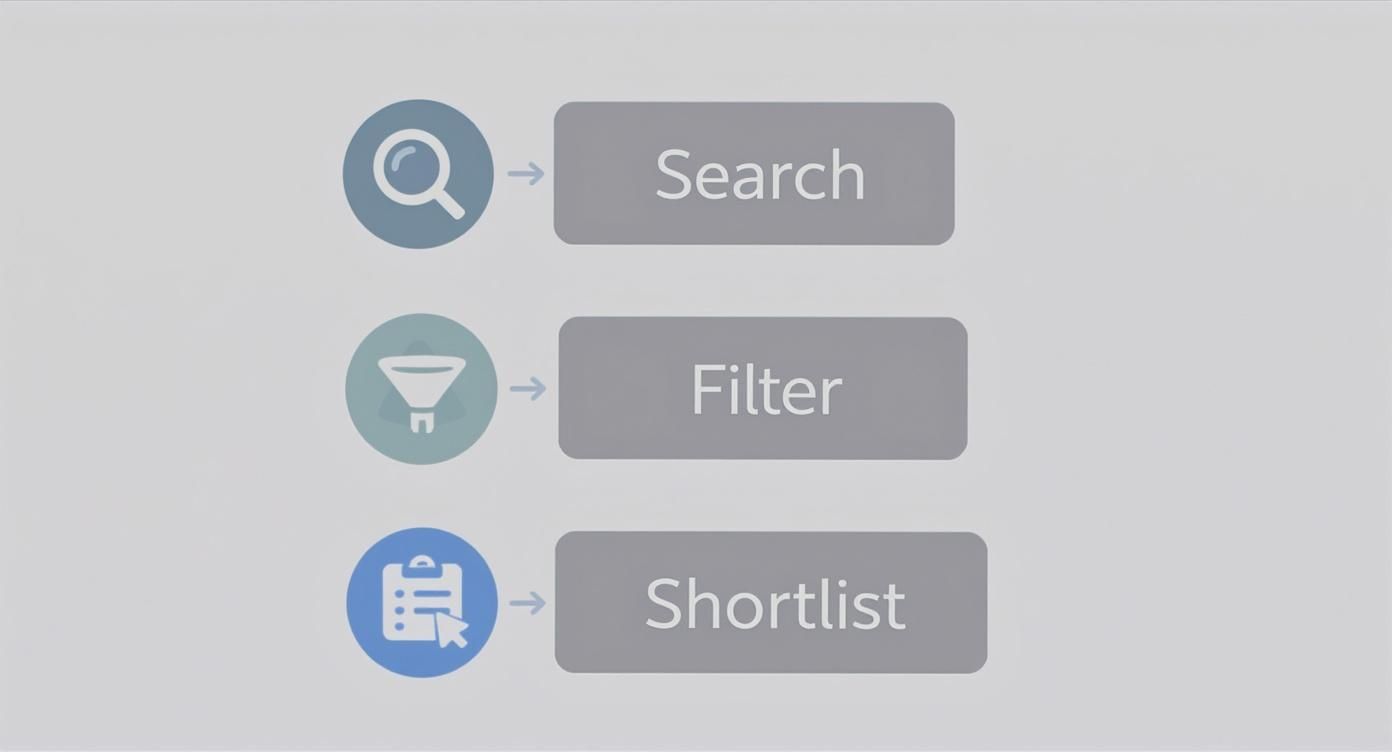
Let's break down exactly what you should be looking for.
Security: Look Beyond the Padlock
Every storage facility will tell you they’re secure. But what does that actually mean? A simple perimeter fence and a camera pointed at the gate is just the starting point—it’s the bare minimum. Real security is built in layers.
When you’re comparing facilities, you need to get specific. Ask them directly about their setup:
- CCTV Coverage: Are the cameras monitored 24/7? Do they cover just the entrance, or do they also watch the internal corridors and driveways where your unit is?
- Access Control: How do you get in? A top-tier facility will give you a unique electronic gate code. A shared code or a simple key is far less secure.
- Individual Alarms: This is a game-changer. Do the individual units have their own alarms? This adds a critical layer of protection.
- On-Site Staff: Is there a human presence on-site during business hours? Nothing deters troublemakers more effectively than staff actively managing the facility.
Access Hours vs. Office Hours
This is a classic trap. Don't get confused between the hours the office is open and the hours you can actually get to your belongings. A facility might advertise they’re open until 6 pm, but that could just be when the staff go home. If your access is restricted to 9 am to 5 pm on weekdays, it could be a real problem.
To help you keep track of these details, a simple comparison table can make the decision-making process much clearer.
Quick Comparison of Storage Facility Features
Use this table to make a direct, side-by-side comparison of your top three choices. It forces you to look at the details and not just the price.
| Feature | Facility A (e.g., Admiral's Yard) | Facility B (Competitor 1) | Facility C (Competitor 2) |
|---|---|---|---|
| Monthly Price | |||
| Hidden Fees? (Admin, lock) | |||
| Access Hours | |||
| CCTV Coverage | |||
| Individual Unit Alarms? | |||
| On-Site Staff? | |||
| Location/Convenience |
By filling this out honestly, you'll quickly see which facility offers the most comprehensive service for your money.
Decoding the True Cost
Pricing can be just as tricky as access hours. That amazing introductory offer might look fantastic, but what happens after three months? Does the price double? Are there sneaky administrative fees, or will you be forced to buy their overpriced insurance?
Always ask for a complete breakdown of all potential charges to figure out the genuine monthly cost. Our guide on finding cheap storage units near me offers more practical advice on avoiding these hidden costs.
Scrutinising the fine print on both access and pricing is non-negotiable. A slightly higher monthly rate at a facility with transparent costs and flexible, 24/7 access often provides far better long-term value than a seemingly cheap deal with hidden restrictions.
With over 4,500 self storage facilities in the UK, you definitely have options. It’s a competitive market, with occupancy rates typically hovering between 83% and 87% and average annual rents around £27 to £30 per square foot. Knowing these figures, which you can explore further in these UK storage market trends from The Box Co, helps you understand if the quotes you're getting are fair for your local area.
What to Look for During an On-Site Visit
Online photos and slick virtual tours can only tell you so much. Before you sign on the dotted line, you absolutely must visit your shortlisted facilities in person. Think of it as a final inspection—your chance to see if the reality matches the marketing and to get a genuine feel for the place. This simple step can save you from a lot of hassle later on.
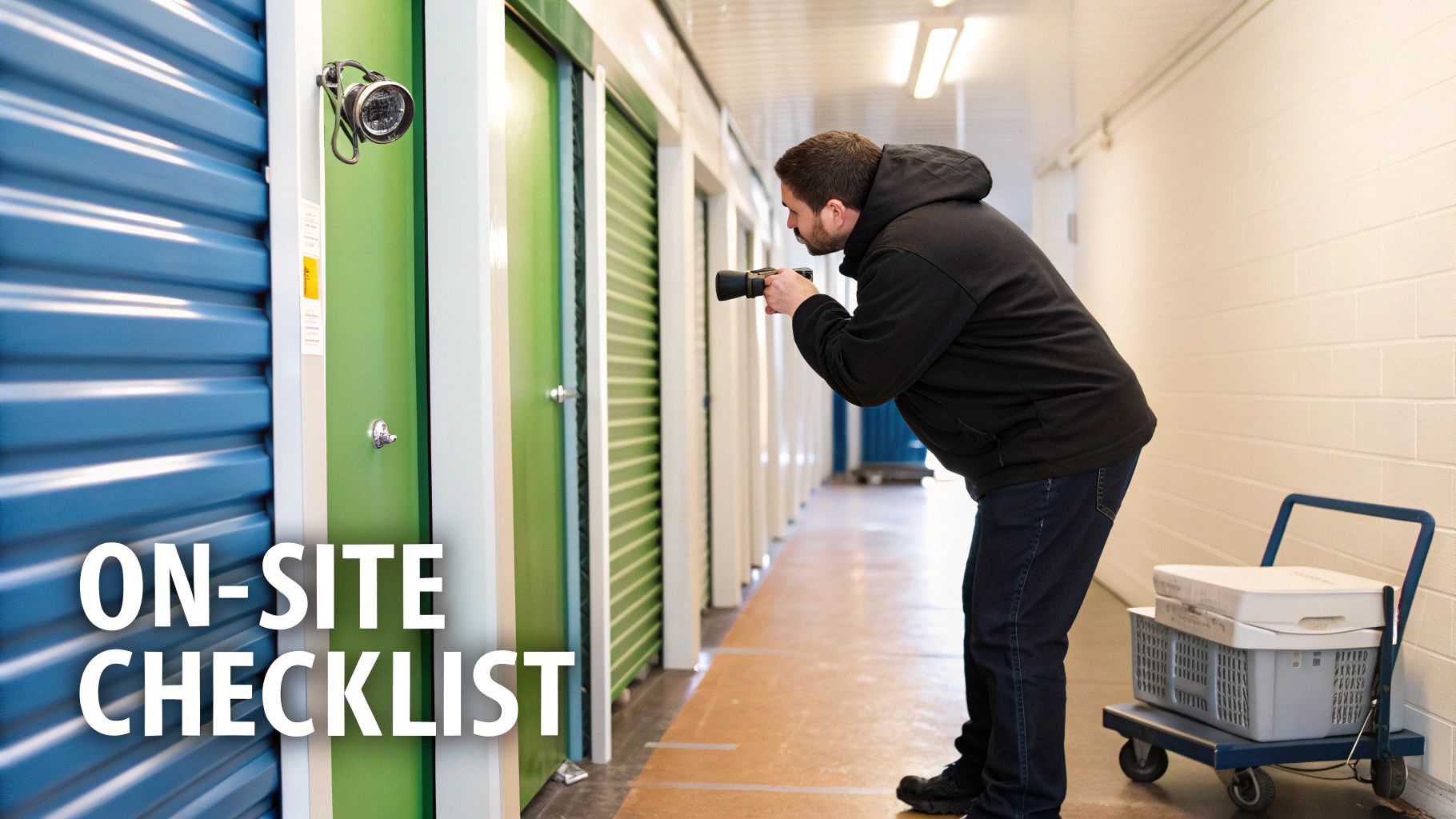
Your first impression as you pull up speaks volumes. Take a look around. Are the grounds and driveways well-maintained, free from litter and potholes? Does the reception area look professional and organised? A clean, tidy facility usually points to a management team that takes pride in their work, which often translates into better security and customer care.
Assessing Security and Condition In Person
Now it's time to play detective. The website promised top-tier security, but you're here to verify that. Get a good look at the security features yourself.
Are the CCTV cameras genuine and positioned to cover key areas like entrances, gates, and corridors? Or do they look like cheap dummy units? Walk the perimeter—is the fencing secure, or are there obvious weak spots?
As you tour the facility, get hands-on and pay attention to the little things:
- Unit Doors and Locks: Ask to see an actual unit. Try the door. Does it roll up and down smoothly, or does it catch and jam? A dodgy door will become a major annoyance every time you visit.
- Pest Control Measures: Keep an eye out for signs of active pest control, like bait boxes tucked away in corners. Seeing these is a good sign; it shows they're proactive about keeping critters out.
- Overall Cleanliness: Notice the corridors. Are they bright, clean, and dry? A musty smell or dusty floors should be a serious red flag.
The on-site visit is your opportunity to confirm that a facility’s security promises are backed by real, operational hardware. It also allows you to gauge the professionalism of the staff—are they happy to answer your questions, or do they seem dismissive?
Evaluating Practical Access and Logistics
Security is one thing, but day-to-day usability is just as important. Put yourself in the shoes of someone moving in. How easy is it to get around?
If you’re looking at an indoor unit, are there plenty of flatbed trolleys available, and are they in good working order? Try walking the path from the loading bay to the unit you’re considering. You’ll quickly find out if it’s a straightforward trip or an obstacle course.
For drive-up units, check the space around them. Is there enough room to park your car or van comfortably without blocking access for others? These seemingly small details make a massive difference to your overall experience. For a deeper dive, our guide to finding secure storage near you has even more practical advice.
The UK self-storage market is booming, with projections showing a rise in new facilities from around 70 in 2024 to an estimated 82 by 2026. This growth gives you more choice than ever, making an informed on-site visit crucial for sorting the great providers from the merely adequate.
Finalising the Rental and Moving In
You've done the legwork—toured the site, weighed up your options, and picked the perfect unit. Now it's time to handle the final details and get ready for moving day. Getting this stage right is all about ensuring a smooth process, with no hidden surprises waiting for you down the line.
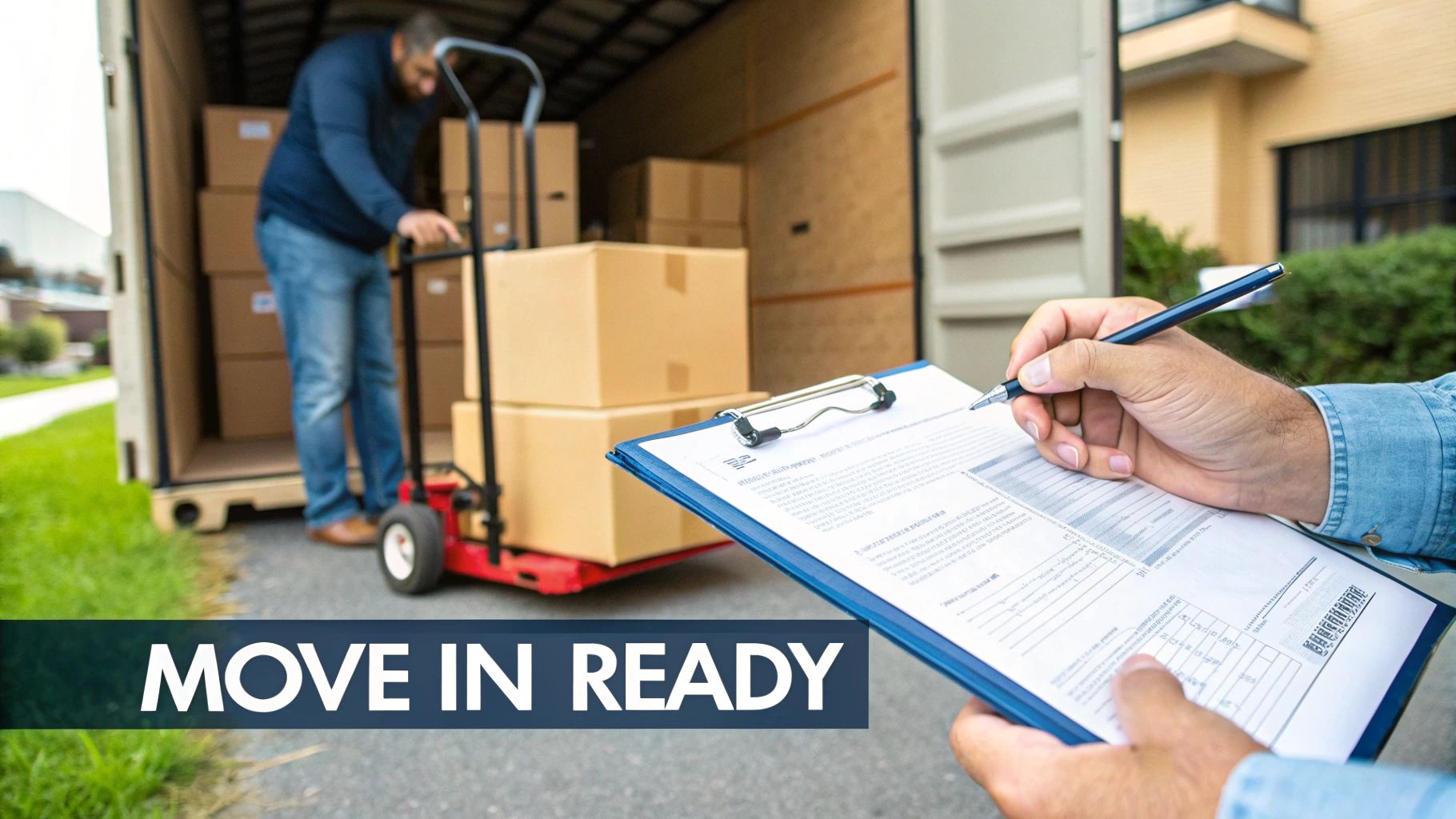
Before you put pen to paper, take a proper look at the rental agreement. Your eyes should be drawn to the fine print on notice periods, the policy on annual rent increases, and the list of prohibited items. A good facility will be completely transparent about this, but it’s still on you to read and understand what you’re signing.
Understanding Your Insurance Cover
Putting your belongings into storage without insurance is a risk not worth taking. It's an absolute must. Most facilities will offer their own insurance policy, which is often the most straightforward option.
That said, it’s worth a quick call to your home insurance provider. Sometimes, you can extend your existing contents policy to cover items held off-site in a storage unit.
Whichever way you go, compare the key details:
- Cover Limit: Is it enough to cover the full replacement value of everything you’re storing?
- Excess: What’s the out-of-pocket cost you'd face if you needed to make a claim?
- Exclusions: Are there specific events (like certain types of water damage) or items that aren't covered?
Getting this right gives you genuine peace of mind, knowing you’re protected against the unexpected.
Always clarify the insurance requirements before you sign the agreement. Failing to have adequate cover can not only put your belongings at risk but may also be a breach of your rental contract.
While you're sorting out the move, don't forget about your post. It’s an easy thing to overlook in the chaos of packing. If you need a hand, you can learn how to redirect your mail in the UK to make sure nothing important gets lost in the transition.
Planning an Efficient Move-In
A bit of planning before you even lift a box can make a world of difference. A well-organised unit isn't just about cramming everything in; it's about being able to find what you need later without a major excavation project.
Think like a Tetris champion. The goal is to use every bit of space you're paying for while keeping your belongings accessible.
Here are a few tips I’ve learned over the years for a stress-free move-in:
- Use Uniform Box Sizes: It sounds simple, but using boxes of a similar size is a game-changer. They stack neatly and safely, letting you build stable walls of boxes right to the ceiling.
- Label Everything Clearly: Grab a thick marker and label every box on at least two sides with its contents. You'll thank yourself months later when you’re looking for that one specific item.
- Create a Central Aisle: If you have the space, leaving a small walkway down the middle is a brilliant move. It means you can get to the items at the back without unpacking the entire unit.
- Position Key Items at the Front: Anything you might need to grab in a hurry should be placed right by the door. Think seasonal decorations, important documents, or specific tools.
- Disassemble Furniture: That bulky dining table or bed frame can eat up a surprising amount of floor space. Take it apart, and tape the bag of screws and bolts securely to one of the larger pieces so nothing gets lost.
By nailing down the contract details and moving in methodically, you set yourself up for a hassle-free storage experience from day one.
Your Local Self Storage Solution at Admiral's Yard
If your search for "self storage units near me" has brought you to Bristol, Leeds, or Slough, you've come to the right place. At Admiral's Yard, we focus on providing practical, secure storage that simply works for you.
All our units are at ground level, which is a real game-changer on moving day. You can drive your car or van right up to the door, making loading and unloading a breeze. No lifts, no trolleys, no hassle—just straightforward access whether you're storing personal belongings or business stock.
Security and Flexibility You Can Count On
We know that when you store your items, you’re placing your trust in us. That’s why we take security seriously. Every one of our sites is monitored by 24/7 CCTV surveillance and protected by controlled gate access, giving you the confidence that your belongings are in safe hands.
You’ll also find a huge range of unit sizes to choose from. Need to store a few boxes of personal keepsakes? Our compact lockers are ideal. Moving house or need space for business inventory? We have large containers that can easily accommodate the contents of an entire home.
Find Your Perfect Unit Today
Life changes, and your storage needs might change with it. We get that. Our rental terms are designed to be flexible, so you’re never tied into a long contract you don’t need. Plus, we believe in honest, transparent pricing—the quote you see is what you’ll pay, with no nasty surprises or hidden fees.
At Admiral's Yard, our goal is to combine top-notch security with everyday convenience, giving you a reliable and affordable storage service right on your doorstep.
Ready to get sorted? Try our handy online space calculator for a quick size recommendation. Or, even better, give our friendly teams in Bristol, Leeds, or Slough a call to chat through exactly what you need.
Your Self Storage Questions, Answered
If you're new to renting a storage unit, you probably have a few questions. That's completely normal. Getting these sorted from the start makes the whole process smoother and ensures there are no surprises down the line. Let's run through some of the most common things people ask when they're looking for "self storage units near me."
How Do I Figure Out the Right Unit Size?
This is easily the question we hear most often, and for good reason—picking the right size saves you from paying for space you don't need or, even worse, not having enough room on moving day.
As a quick guide, a 50 sq ft unit is usually about right for the contents of a one-bedroom flat. If you're clearing out a typical three-bedroom house, you’ll probably be looking at something closer to 150 sq ft.
But you don't have to guess. The most reliable way to get a solid estimate is to use an online space calculator. Most storage websites have one. You just list out your big-ticket items—sofas, beds, appliances—and give a rough count of your boxes, and it'll tell you what size you’re likely to need.
Expert Tip: It often pays to go one size up from what the calculator suggests. That little bit of extra space gives you room to create a walkway, so you can actually get to the boxes at the back without having to empty the entire unit first.
Is Special Insurance Really Necessary for My Belongings?
In short, yes. Insuring your items isn't just a good idea; it’s a requirement. Any professional self storage facility will ask to see proof of insurance before they hand you the keys. It’s a standard part of the process and it’s there to protect you.
Most facilities will offer a specialised storage insurance policy, which is usually the most straightforward option. However, it's worth giving your home insurance provider a call first. Sometimes, you can extend your existing contents insurance to cover things held in storage. Just be sure to compare the level of cover, the excess, and the cost to see which policy makes the most sense for what you're storing.
What Items Are Banned from a Storage Unit?
For safety, hygiene, and legal reasons, every facility has a list of prohibited items. It's really important to know what's on this list before you start packing.
While each facility's list might differ slightly, there are some universal no-gos. You generally can't store:
- Perishable Goods: No food of any kind, basically.
- Hazardous or Flammable Materials: This covers things like petrol, paint, gas canisters, and fireworks.
- Illegal Items: Anything you're not legally allowed to possess is obviously out.
- Living Things: This one’s pretty clear—no plants or animals.
Always double-check the specific terms and conditions of your rental agreement. A quick read-through can save you a lot of hassle on move-in day.