

For many businesses, the idea of self storage might conjure up images of dusty archives or a temporary spot for office furniture during a move. But that's an outdated view. Today, smart businesses are realising that self storage is a powerful, flexible tool for managing everything from stock and equipment to important documents, all without the headache and expense of a long-term commercial lease.
It’s about having secure, scalable space that bends to your company's needs, not the other way around. This helps you get a real grip on your inventory, make your operations run smoother, and keep a tight rein on your overheads.
How Businesses Use Self Storage as a Strategic Advantage
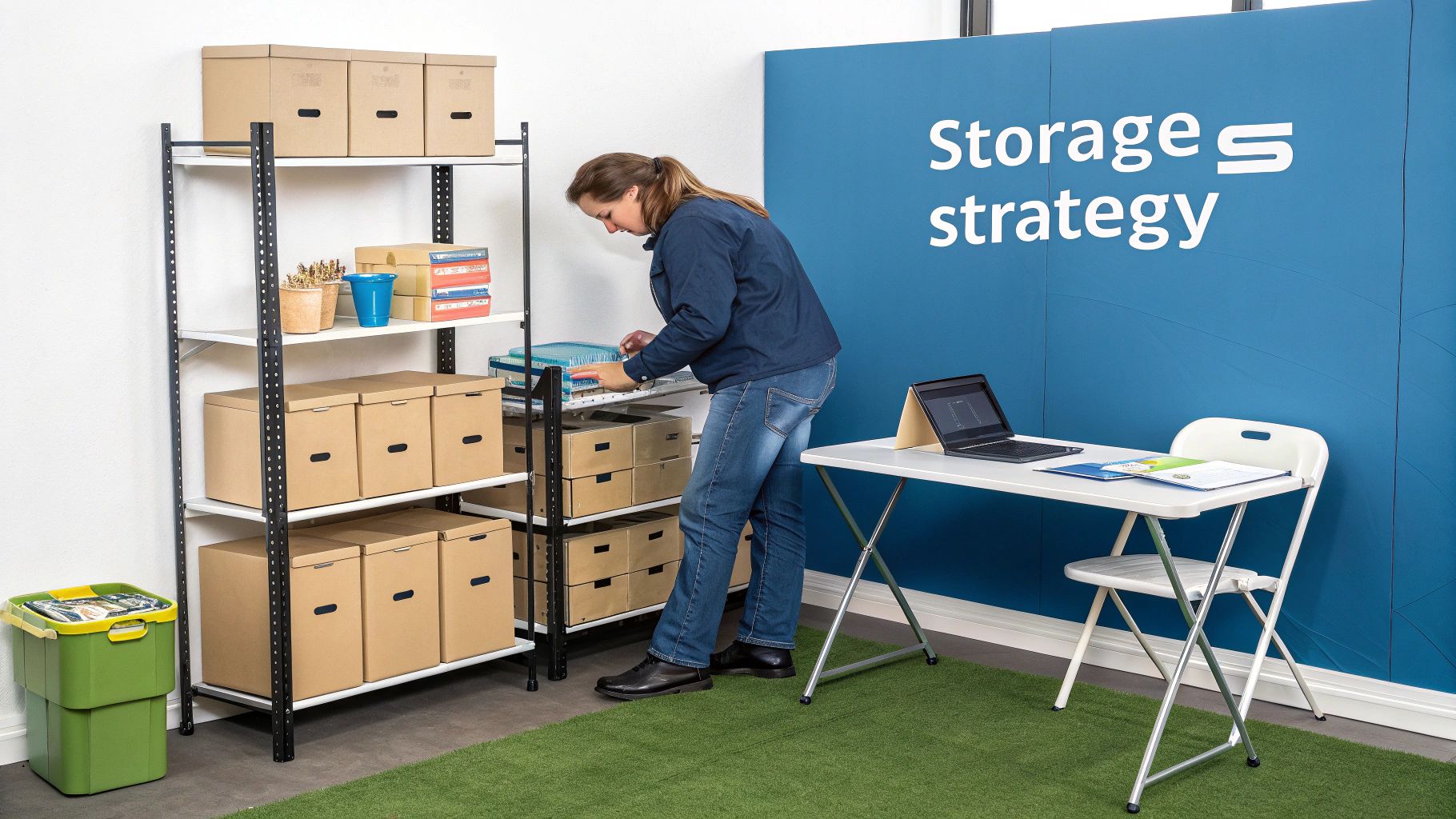
The shrewdest companies are looking past traditional property leases and finding a genuine strategic asset in self storage. It’s no longer just a forgotten cupboard for old files; it's evolved into a dynamic operational hub for businesses of all shapes and sizes.
From online retailers just starting out to seasoned tradespeople with years of experience, businesses are using storage units to get a leg up on the competition. The secret lies in a simple shift in thinking: see self storage not as just 'extra space,' but as a flexible, pay-as-you-go solution for your physical assets.
The Modern Approach to Business Space
Here’s a good way to think about it. Cloud services completely changed the game for digital data, replacing expensive, clunky on-site servers with scalable, on-demand storage. Self storage for businesses does exactly the same thing for your physical goods. It offers a nimble, practical alternative to the rigid and costly world of commercial leases.
This approach gives you the freedom to react quickly to market shifts, seasonal rushes, or sudden growth opportunities without being tied down by a hefty financial commitment. It’s a core part of building a modern, agile business.
Instead of being a fixed cost, storage becomes a variable expense directly tied to your current operational needs. This gives you unparalleled control over your budget and allows you to invest capital where it truly matters—in growing your business.
Unlocking Key Business Benefits
When you weave self storage into your day-to-day operations, you can unlock some serious advantages. This isn't just about saving a bit of cash here and there; it's about building a stronger, more efficient organisation from the ground up.
- Operational Agility: Need more space for the Christmas rush or want to scale back during a quiet January? You can scale your storage up or down at short notice, perfectly matching your inventory needs. No more paying for empty warehouse space or frantically trying to find room when a big order comes in.
- Sharpened Cost Control: You get to sidestep all the hefty costs that come with a traditional lease. Think business rates, utility bills, maintenance fees, and long-winded legal contracts. With self storage, you have one simple, all-in monthly fee.
- Fuelled Growth: Self storage is a low-risk launchpad for expansion. You could test a new market by setting up a small local distribution hub or take advantage of a bulk stock offer without having to commit to a whole new warehouse.
This guide will give you a practical roadmap for making self storage a central part of your company's success. We’ll walk through the real-world benefits, look at common ways businesses use it, and explain how to choose the right solution for you, ensuring you can make a smart, strategic decision.
The Real-World Benefits of Commercial Self Storage

It’s easy to think of self storage as just a place to put extra stuff, but for a modern business, it’s so much more. The benefits go far beyond simply gaining more space; they tap into the core of how a smart, agile company operates today. When you look closer, the advantages really fall into four key areas: cost, flexibility, security, and scalability.
Thinking about self storage for businesses in this way shows it for what it is—a strategic asset. It’s a decision that provides immediate financial relief while building long-term operational resilience, freeing you up to concentrate on what really matters: running your business.
It's Far More Cost-Effective
Let's be honest, one of the biggest draws of self storage is the significant cost saving over a traditional commercial lease. A conventional property saddles you with a long list of overheads you might not even think about at first—business rates, utilities, service charges, and surprise maintenance bills.
Self storage cuts through all that. You get a single, predictable monthly fee that covers everything. This simple, transparent pricing makes budgeting a breeze and frees up capital that can be put to better use, whether that's investing in more stock, boosting your marketing, or training your team.
A rigid commercial lease locks you into a long-term financial commitment, no matter how your business is doing. Self storage strips away those extra costs, offering a lean, budget-friendly alternative that directly helps your bottom line.
You Get Unmatched Flexibility
The business world is never static. You have seasonal peaks, unexpected lulls, and projects that come and go. A fixed-size warehouse or office can quickly become a liability—either bursting at the seams during a busy period or sitting half-empty and costing you money during a quiet spell.
This is where self storage really shines. Most agreements are on a simple monthly basis, giving you the freedom to change your space as your needs change. You can easily scale up for seasonal inventory, downsize after a big project wraps up, or adapt to market shifts without any penalties.
This dynamic approach to space is becoming essential. In fact, small businesses and tradespeople now account for around 17% of the total demand in the UK's self storage market, driven by this need for flexibility. It’s part of a bigger trend where businesses are moving away from traditional property solutions. If you want to dig deeper, you can discover more about the market's growth and what is driving it.
Robust Security Gives You Peace of Mind
Protecting your assets—be it high-value stock, vital equipment, or confidential paperwork—is a top priority. A professional self storage facility offers layers of security that most small businesses simply couldn't afford to install themselves. It’s about giving you complete peace of mind.
These features almost always include:
- 24/7 Monitored CCTV: Cameras keep a watchful eye on the entire site, covering all entrances, exits, and corridors around the clock.
- Secure Perimeter Fencing: A solid outer boundary provides the first line of defence against any unauthorised access.
- Gated Electronic Access: You get a unique PIN or key fob to enter, meaning only authorised people can get in, and every visit is logged.
- Individually Secured Units: Your unit is your own private, secure space. You bring your own padlock, so you are the only person who holds the key.
With this kind of comprehensive security in place, you can store your valuable items with genuine confidence.
Seamless Scalability to Support Your Growth
For any ambitious business, growth is the end goal. But expanding your physical footprint the old-fashioned way often means taking a huge financial leap, like committing to a lease on a much larger warehouse.
Self storage offers a much smarter, more gradual way to grow. You can start with a small unit and simply move to a bigger one—or rent a second one—as your business expands. It lets you scale your operations in line with your revenue, taking the risk out of committing to property too early. It’s a low-risk, high-reward strategy for growing your business.
Real-World Business Storage Applications
The real value of self storage for businesses snaps into focus when you see how it solves genuine, day-to-day problems. It's one thing to talk about "extra space" in theory, but it's another to see how companies are using storage units as active hubs that boost efficiency and give them a competitive edge. These examples show just how a simple storage unit can become a seriously powerful business tool.
This shift in thinking is crucial. A storage unit stops being a dusty, forgotten space and becomes a vital part of the supply chain, a secure workshop, or a nimble logistics base. For many businesses, it’s the missing piece of the puzzle that lets them grow without the headache and commitment of a long-term commercial lease.
The E-commerce Micro-Fulfilment Centre
Picture a growing online clothing boutique. The owner started out working from a spare room, but as orders flooded in, stock quickly swallowed their home. It was chaos. Picking and packing orders was slow and clumsy, which led to shipping delays and frustrated customers.
The answer? A medium-sized, indoor self storage unit. This clean, dry, and secure space was quickly turned into a micro-fulfilment centre. Stock was properly organised on shelves, a dedicated packing station was set up, and suddenly, managing inventory became straightforward and accurate.
- Problem: Disorganised home-based inventory was slowing down order processing.
- Solution: A 100 sq ft storage unit became a dedicated stockroom and packing hub.
- Outcome: Order fulfilment times were slashed by 50%, accuracy shot up, and the business could finally handle a higher volume of sales—all while the owner got their house back.
The Tradesperson’s Secure Equipment Hub
A landscape gardener was facing a completely different set of problems. All their expensive mowers, strimmers, and tools were kept in a garden shed, making them a prime target for theft. On top of that, loading the van every morning was a chore, and there was no room to buy materials like compost or paving slabs in bulk.
By renting a ground-level, drive-up storage unit, the gardener created a secure and brilliantly accessible equipment hub. They could pull their van right up to the unit door, making loading and unloading almost effortless. The extra space also meant they could start buying materials in larger quantities, saving a good amount of money.
This strategic use of self storage provides tradespeople with a professional and secure base of operations away from home. It tightens up security, makes the daily grind more efficient, and opens up cost savings through bulk purchasing.
Of course, for many businesses, self-storage is just one part of their inventory management. Once products are ready to leave the unit, understanding how to manage the next step, like calculating shipping charges accurately for your Australian business, is another vital piece of the logistics puzzle.
The Event Planner's Logistics Base
An event planning company was juggling a huge inventory of decorations, furniture, lighting, and sound equipment. Before, these items were dotted across several garages and a small lock-up. Preparing for an event was a logistical nightmare, with the team wasting hours driving between locations just to gather everything for a single job.
A large self storage unit brought everything under one roof. This central logistics base allowed the team to organise their inventory by event type, stage equipment for upcoming jobs, and even carry out maintenance. It completely overhauled their prep process, saving them priceless hours before every single event.
The Storage Unit as an Operational Hub
These stories aren't isolated incidents; they're part of a much bigger trend. Businesses are quickly realising that a storage unit can be far more than just storage—it can be a functional workspace. In fact, research shows that around 24% of self storage users are actually running a business directly from their unit. This points to a major shift in how small and medium-sized businesses view these spaces.
Whether it’s an e-commerce brand, a local tradesperson, or a growing service provider, the right storage solutions for business can lay the groundwork for smarter, more effective operations. By thinking a little differently, companies are turning a simple monthly expense into a strategic investment that pays back in time, money, and peace of mind.
How to Choose the Right Business Storage Unit
Picking the right self-storage unit isn't just about finding spare room; it’s a strategic decision that needs to fit neatly into your daily operations. Get it wrong, and you could be paying for empty space or, even worse, dealing with the logistical nightmare of a unit that’s just too small. The key is to think methodically, finding a solution that not only works for you today but can also adapt as your business grows.
Your first decision point comes down to understanding the two main types of storage on offer. Each is designed with a specific purpose in mind, and matching what you're storing to the right environment is the first step toward a smart, efficient strategy.
Indoor Units vs External Containers
The two most common options you'll encounter are indoor units and external, drive-up containers.
An indoor unit is exactly what it sounds like—a secure space inside a larger building, often with the option for climate control. These are the perfect choice for anything sensitive to temperature swings or humidity. Think important documents, electronics, delicate stock like textiles, or even pharmaceutical supplies. They provide a clean, stable environment that acts as a fortress against the elements for your most valuable assets.
On the other hand, an external container offers unbeatable convenience. These are typically ground-level steel units that you can drive a van or lorry right up to. This makes them a lifesaver for businesses that need to load and unload bulky or heavy items frequently. If you're a tradesperson storing tools and materials, a construction firm with equipment, or a retailer managing palletised stock, this direct access is a game-changer.
This simple decision tree can help you picture which path makes the most sense for your business.
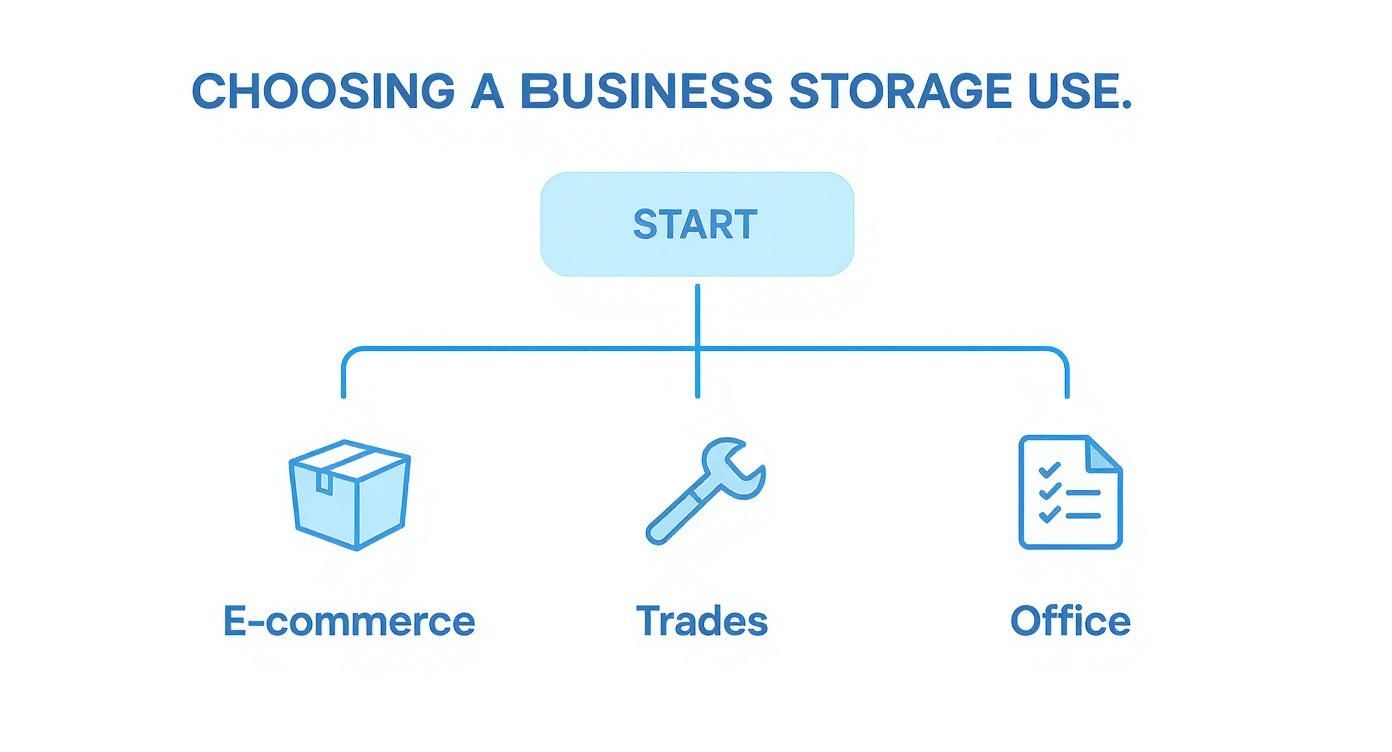
As you can see, different business models naturally have different storage needs—from secure document archiving for office-based firms to robust, easily accessible equipment storage for tradespeople.
Matching Unit Size to Your Business Needs
Once you know whether you need an indoor or outdoor unit, the next big question is size. It's a classic Goldilocks problem. Go too big, and you're essentially paying for fresh air. Go too small, and you'll end up with a cramped, disorganised space that actually slows you down.
Visualising what fits where is crucial, but it can be tricky.
To give you a clearer picture, here’s a straightforward guide to common unit sizes and what they can realistically hold for a business.
A Guide to Business Storage Unit Sizes and Capacities
| Unit Size (sq ft) | Typical Dimensions (ft) | Equivalent To | Ideal for Storing |
|---|---|---|---|
| 50 sq ft | 10 x 5 | Large garden shed | Approx. 80-100 archive boxes, marketing materials, or a small amount of stock. |
| 100 sq ft | 10 x 10 | Single garage | Palletised goods (2-3 standard pallets), tools and equipment, or e-commerce inventory. |
| 150 sq ft | 15 x 10 | Large single garage | Bulk stock (4-5 pallets), office furniture, or larger trade equipment. |
This table gives you a great starting point for estimating your needs.
Of course, for a more precise calculation, it's always best to use a dedicated tool. Our guide on how much storage space you might need dives deeper into the details to help you make the most accurate choice.
Considering Essential On-Site Facilities
Beyond the unit itself, the on-site amenities can be what turns a simple storage space into a genuine extension of your business. The UK self-storage industry now sees an annual turnover of over £1.2 billion, and with that growth comes an increasing number of features designed specifically for commercial clients. The market is split roughly between 61% internal units and 39% container-based units, reflecting this diverse demand.
When you're comparing facilities, look beyond the price and consider these vital factors:
- 24-Hour Access: Can you get to your stock or equipment whenever you need to? An early start for a job or a late-night e-commerce order run requires genuine round-the-clock access.
- Power and Wi-Fi: Would having power in your unit make a difference? You could charge tool batteries overnight or use a tablet with a reliable Wi-Fi connection to manage your inventory on the spot.
- On-Site Services: Does the facility offer to accept deliveries on your behalf? This single service can save you countless hours and make your entire supply chain run more smoothly.
Getting to Grips with Security, Insurance, and Contracts
Choosing a self storage partner for your business is about more than just finding enough space. You’re entrusting them with your livelihood—your stock, equipment, and vital documents. Real peace of mind comes from understanding three key pillars: the facility's security measures, the insurance that protects your goods, and the contract you sign. Let's break down what you need to know to ensure your assets are truly safe.
A top-tier facility doesn't just put a padlock on a door and call it a day. They operate with a multi-layered security system that runs 24/7. Think of it less like a simple lock-up and more like a purpose-built fortress for your business assets, designed to deter, detect, and document any unauthorised activity.
If you want to dive deeper into what modern protection looks like, this practical warehouse security guide offers some great insights into assessing risks and implementing robust safeguards.
What Real Security Looks Like
The first line of defence is a solid perimeter. Look for robust fencing and, crucially, electronically controlled gates. Access should be restricted to a unique PIN code or key fob, which means only authorised customers and staff can get on-site. This system creates a clear, time-stamped log of everyone who comes and goes.
Next up is surveillance. Wall-to-wall, 24/7 CCTV coverage is a must-have. Cameras should be strategically placed to monitor all critical areas like entrances, exits, and main access routes. It’s not just about recording what happens; visible, comprehensive surveillance is one of the most effective deterrents there is.
Finally, there’s the security of your unit itself. Your space should be individually secured, and you should be the only person with the key to your padlock. For businesses that need that extra level of assurance, some facilities offer individually alarmed units that trigger an immediate alert if your specific unit is breached.
Making Sense of Business Storage Insurance
Here’s a common and costly mistake: assuming your standard business insurance automatically covers goods stored off-site. In reality, most general policies either exclude items in storage or offer cover that’s simply not enough, leaving your business dangerously exposed.
It's absolutely vital to understand this: the storage facility's insurance covers their building and their liability, not the contents of your unit. The responsibility for insuring your stock, equipment, and documents falls squarely on your shoulders.
This is precisely why specialised self storage insurance exists. It's designed to cover the specific risks of storing items away from your main premises, protecting your assets against theft, fire, flooding, and other potential damages. Any reputable facility will require you to have proof of insurance before you move in, and many, like us, can offer tailored plans. You can learn more about our specific storage unit contents insurance to see what's typically included.
Reading Between the Lines of the Rental Agreement
The rental agreement is the legal blueprint for your storage arrangement. Don't just skim it—read it carefully before you sign. Paying close attention to a few key clauses now can save you a world of headaches later.
- Payment Schedule: Check the monthly fee, the due date, and what happens if a payment is late. A good contract is completely transparent about all costs, with no nasty surprises or hidden fees.
- Notice Period: Know exactly how much notice you need to provide before you move out. It’s usually a simple process, often just a week or two, but it’s crucial for planning a smooth exit when the time comes.
- Prohibited Goods: Every facility has a strict list of items you can’t store, mainly for safety and legal reasons. This nearly always includes flammable materials, perishable food, illegal substances, and live animals. Storing prohibited items is a serious breach that can void your insurance and lead to immediate contract termination.
Making the Right Choice: Your Final Business Storage Checklist
Picking the right self storage unit is more than just finding a spare room for your business; it's a strategic decision that can genuinely impact your day-to-day operations and even your profitability. You’ve got the lowdown on the benefits, different unit types, security, and contracts. Now, let’s pull it all together with a practical checklist to help you weigh up your options and make a choice you feel confident about.
This isn't about guesswork. It's about finding a storage partner that actually helps your business grow.
First Things First: Sizing Up Your Own Needs
Before you even start looking at facilities, you need a crystal-clear picture of what you actually require. Nailing this down from the start saves a lot of time and makes sure you’re only looking at places that are a good fit.
- How much space do I really need? Go beyond a rough estimate. Calculate the cubic metres you'll need for your stock, equipment, or archives. A smart move is to add a little extra wiggle room—it makes accessing things much easier and gives you space to grow into.
- What am I actually storing? Are you storing delicate electronics or important documents that could be damaged by damp or extreme temperatures? If so, an indoor, climate-controlled unit is a must. If it’s robust tools or building materials, a sturdy external container will do the job perfectly.
- When will I need to get in? Think about your business rhythm. Do you need 24/7 access for those early-morning stock picks or late-night drop-offs? Or do standard business hours work just fine for you?
Evaluating the Facility: More Than Just Four Walls
With your own needs mapped out, it’s time to look closely at the facilities themselves. The best ones offer more than just a locked door; they provide features that can become an extension of your own business operations.
A great facility doesn't just offer space; it offers solutions. Look for features that actively make your business operations smoother, safer, and more efficient. This is the difference between a simple expense and a strategic investment.
- Is the location practical? Factor in the travel time for you and your staff. Is it close to major motorways for easy deliveries and collections? A convenient location can save you hours of wasted time each week.
- Does the security stack up? Don't just take their word for it. Look for the essentials: 24/7 monitored CCTV, proper perimeter fencing, and secure electronic gate access. For high-value goods, ask if they provide individually alarmed units.
- What on-site extras are available? The little things make a big difference. Check if they can accept deliveries on your behalf, if there’s power and Wi-Fi in the units, or if they have pallet trucks and trolleys available to save your back during loading.
The Nitty-Gritty: Costs and Contracts
Finally, let's talk money and paperwork. A transparent, fair agreement is the bedrock of a good partnership, so it pays to be clear on every detail before you sign.
- Is the pricing transparent? Get a clear breakdown of the monthly cost. Don’t be afraid to ask directly: are there any other charges I should know about, like a security deposit or one-off admin fees?
- Is my insurance cover sufficient? The facility will require you to have insurance, but you need to ensure the policy covers the full replacement value of your goods. The last thing you want is to be underinsured if something goes wrong.
- What are the key terms of the agreement? Pay close attention to the notice period you have to give before moving out. It’s also crucial to read and understand the list of prohibited items to make sure you stay compliant.
Your Business Storage Questions, Answered
When you're thinking about using self storage for your business, a few practical questions always come up. It's only natural. We've put together some straightforward answers to the things we get asked most often, helping you see just how easily a storage unit can fit into your day-to-day operations.
Can I Get Deliveries Sent Straight to My Storage Unit?
Absolutely. Most modern self storage sites are set up to handle deliveries for business customers. The key is to have a quick chat with the site manager first to make sure they can accommodate exactly what you need.
Here at Admiral's Yard, for example, we offer a goods receipt and dispatch service. Our team on-site can sign for your parcels and pallets, keeping them safe and secure until you're ready to deal with them. It’s a real game-changer for many businesses, freeing you up from having to hang around waiting for a courier to show up.
What Are the Access Hours Like for Businesses?
While standard hours can vary from place to place, you’ll find that most facilities offer extended access specifically for business clients. In many cases, you can get 24/7 access using a secure PIN code or key fob.
This kind of flexibility is essential. After all, not every business runs on a 9-to-5 clock. If you’re an online seller packing orders late at night or a tradesperson loading up the van before sunrise, you need your storage to work around you—not the other way around.
Being able to get to your stock or equipment whenever you need it is one of the biggest perks of using self storage. It removes a massive operational headache and lets you react quickly to customer orders and new opportunities.
Will I Have to Pay Business Rates or Other Hidden Fees?
This is one of the best parts: no, you do not have to pay business rates. That’s a huge financial advantage over leasing a traditional commercial property. The monthly fee you agree on is what you pay, without those council charges on top.
The only common extra you’ll need to account for is insurance, which is a must-have to protect your goods. Any reputable storage provider will be completely upfront about any other potential costs, like a one-off security deposit, right from the start. No nasty surprises.
Can I Actually Run My Business From the Unit?
More and more, the answer is yes. We’re seeing a growing number of small businesses, especially in e-commerce and the trades, use their units for more than just storage. It often becomes a mini-hub for light operational tasks.
Common activities include:
- Order Fulfilment: Picking and packing products ready to be shipped out.
- Stock Management: Organising inventory on racking and shelves.
- Light Assembly: Putting together simple products that don’t involve heavy machinery.
Of course, there are some sensible limits. You can't set up a customer-facing shopfront from your unit, and you can't work with any hazardous or flammable materials. But with many units now offering power and Wi-Fi, using your space as a cost-effective operational base is becoming a genuinely smart move.
Ready to find a flexible, secure, and affordable space for your company? Admiral's Yard Self Storage provides first-class business storage solutions in Bristol, Leeds, and Slough. Take a look at our secure, drive-up units and see how we can help your business grow at https://admiralsyard.co.uk.