

When you hear the term “long-term storage,” what comes to mind? For most people, it’s about finding a secure, off-site home for belongings you don’t need right now but definitely want to keep. Generally, we’re talking about a period of six months or more. Think of it as a safe and convenient extension of your own home or business, giving you peace of mind that your valued items are protected.
Defining Long-Term Storage and Its Purpose
At its core, long-term storage is much more than a temporary holding spot. It’s your personal archive for family heirlooms, a flexible warehouse for business inventory, or a secure haven for your possessions during a major life transition. It's a practical solution designed to free up precious space in your daily life without forcing you to part with things that matter.
This is a world away from short-term storage, which is typically used for a few weeks or months to get through a quick project, like redecorating a room. Long-term solutions are built for the marathon, not the sprint, offering stability and security over an extended timeline.
When Does Long-Term Storage Become Essential?
Life has a knack for throwing curveballs that make you rethink your space. Long-term storage steps in to turn what could be a logistical nightmare into a straightforward process. You might find it’s the perfect answer when you’re:
- Moving Abroad or Travelling: Setting off on a year-long adventure or relocating for work? A secure unit keeps your furniture and personal effects safe and sound until you return.
- Downsizing Your Home: Moving to a smaller place doesn’t have to mean a painful clear-out of treasured belongings. Storage lets you hold onto items that simply won’t fit in your new home.
- Decluttering or Renovating: A major home renovation or a big decluttering project can leave you with a mountain of furniture and boxes. A storage unit keeps everything protected from dust and damage, and completely out of your way.
- Managing Business Needs: For businesses, a unit can be an archive for critical documents, a depot for surplus stock, or a home for equipment that isn’t needed every day. For a deeper dive, you can explore various long-term storage solutions.
The Growing Trend of Extended Stays
It’s clear that the need for stable, long-term options is on the rise. Across the UK self-storage industry, we've noticed a significant shift: customers are keeping their units for much longer than they used to. This tells us that people are viewing storage less as a temporary fix and more as a permanent, practical part of their lives.
This trend is backed up by industry data showing that fewer customers are vacating their units within a year. It reflects how self-storage has become a key part of planning for major life events and running a business.
Recent figures really bring this change to light. The 2025 UK Self Storage Industry Report pointed out that the churn rate—the percentage of customers leaving within a year—has fallen to 97%, a drop of 1% from the previous year. While it might seem like a small number, this statistic confirms that once people move in, they’re staying longer, which speaks volumes about the value they find in long-term storage. You can see more in the full industry report. This shift shows a growing trust in the security and convenience of keeping items off-site for the long haul.
Choosing the Right Long Term Storage Unit
Picking the right unit for long-term storage is probably the single most important decision you'll make. It’s about more than just finding an empty space; it’s about matching the size, features, and location to what you’re storing. Get this right from the outset, and you'll save yourself a world of hassle, not to mention money and potential heartbreak down the line.
What you're storing and why you're storing it will really guide your decision, as this handy decision tree shows.
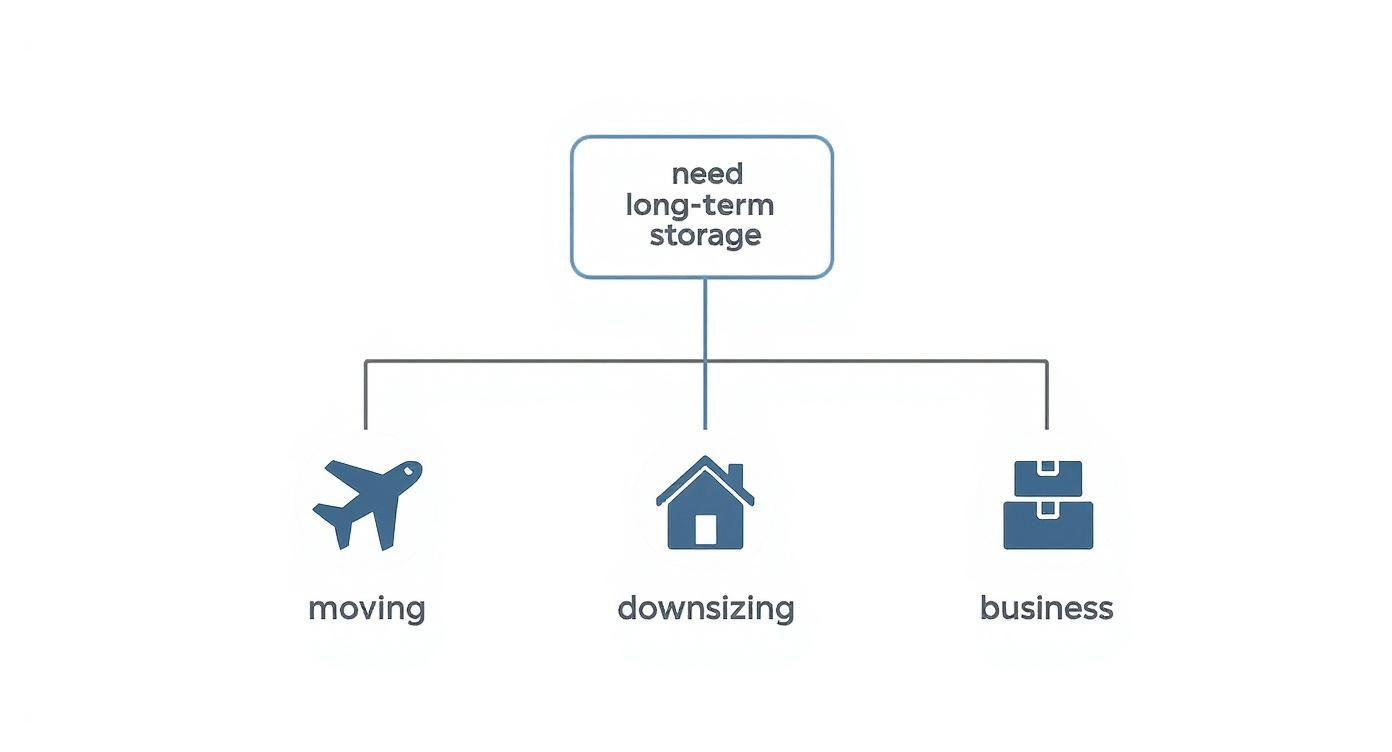
As you can see, life events like moving house, downsizing, or even managing business stock create very different storage needs, which in turn point to different types of units.
Finding the Perfect Size
Trying to visualise square footage can be a real head-scratcher. It often helps to think about it in terms of familiar spaces. After all, there's no point paying for a cavernous unit you won't fill, but cramming everything into a space that's too small is a recipe for damaged belongings.
Here's a simple way to think about it:
- A 25 sq ft unit is about the size of a large walk-in wardrobe. It's perfect for a few dozen boxes, small furniture like a chest of drawers, and personal odds and ends.
- A 75 sq ft unit feels more like a big garden shed. You could comfortably fit the contents of a one-bedroom flat in here, including the sofa, bed, and kitchen appliances.
- A 150 sq ft unit is roughly the size of a single-car garage. This is a popular choice for families between moves, as it can hold the entire contents of a typical two or three-bedroom house.
Getting the size right is crucial. For a bit more personalised help, our guide on how much storage space you need can walk you through it step by step.
Indoor, Drive-Up, or Climate-Controlled?
Once you have a handle on the size, the next thing to consider is the type of unit. Each offers different benefits depending on what you're storing and how you plan to use the space.
This table breaks down the main differences to help you decide.
Comparing Long Term Storage Unit Types
| Feature | Standard Drive-Up Unit | Indoor Unit | Climate-Controlled Unit |
|---|---|---|---|
| Best For | Heavy furniture, business stock, items needing frequent access. | General household goods, boxes, items less sensitive to temperature. | Valuables, electronics, wood/leather furniture, documents, artwork. |
| Access | Park directly at the door for easy loading/unloading. | Accessed via internal corridors, offering shelter from the weather. | Usually located indoors, providing the most protection. |
| Protection | Secure from intruders and basic weather (rain, wind). | Extra layer of building security and weather protection. | Protects from intruders, weather, and humidity/temperature changes. |
| Cost | Typically the most budget-friendly option. | Mid-range pricing. | Premium option due to the specialised environment. |
Deciding between these really comes down to what you're protecting. For general household goods, a standard or indoor unit might be perfectly fine. But for anything valuable or sensitive, you have to consider the British weather.
The UK's damp, fluctuating climate is a genuine threat to many items. While our standard units are brilliant at keeping the elements out, climate-controlled storage takes protection to the next level by maintaining a stable temperature and humidity.
For long-term storage, especially here in the UK, climate control isn’t just a nice-to-have—it's an essential safeguard. It actively prevents the damage caused by moisture, mould, mildew, and extreme temperature swings.
This feature is non-negotiable for certain belongings. Wooden furniture can warp and crack, electronics can suffer from corrosion inside, and important paper documents can degrade in a standard unit over time. If anything on this list is going into storage, you'll want to seriously consider a climate-controlled unit:
- Wooden or leather furniture
- Electronics (computers, TVs, sound systems)
- Important documents and photographs
- Artwork and antiques
- Musical instruments
Ultimately, the choice depends on your priorities and what you're storing. For a deeper dive, check out your guide to long-term storage units for more expert insights. By thinking through size, features, and access, you’ll be well on your way to finding the perfect home for your belongings.
How to Pack Your Belongings for Long Term Storage
When you're putting things away for months or even years, proper packing is more than just a chore—it’s your best insurance policy. Think of it as creating a time capsule for your possessions. A few hours spent getting it right now can save you a world of heartache and expense down the line, ensuring everything comes out looking just as good as it did going in.
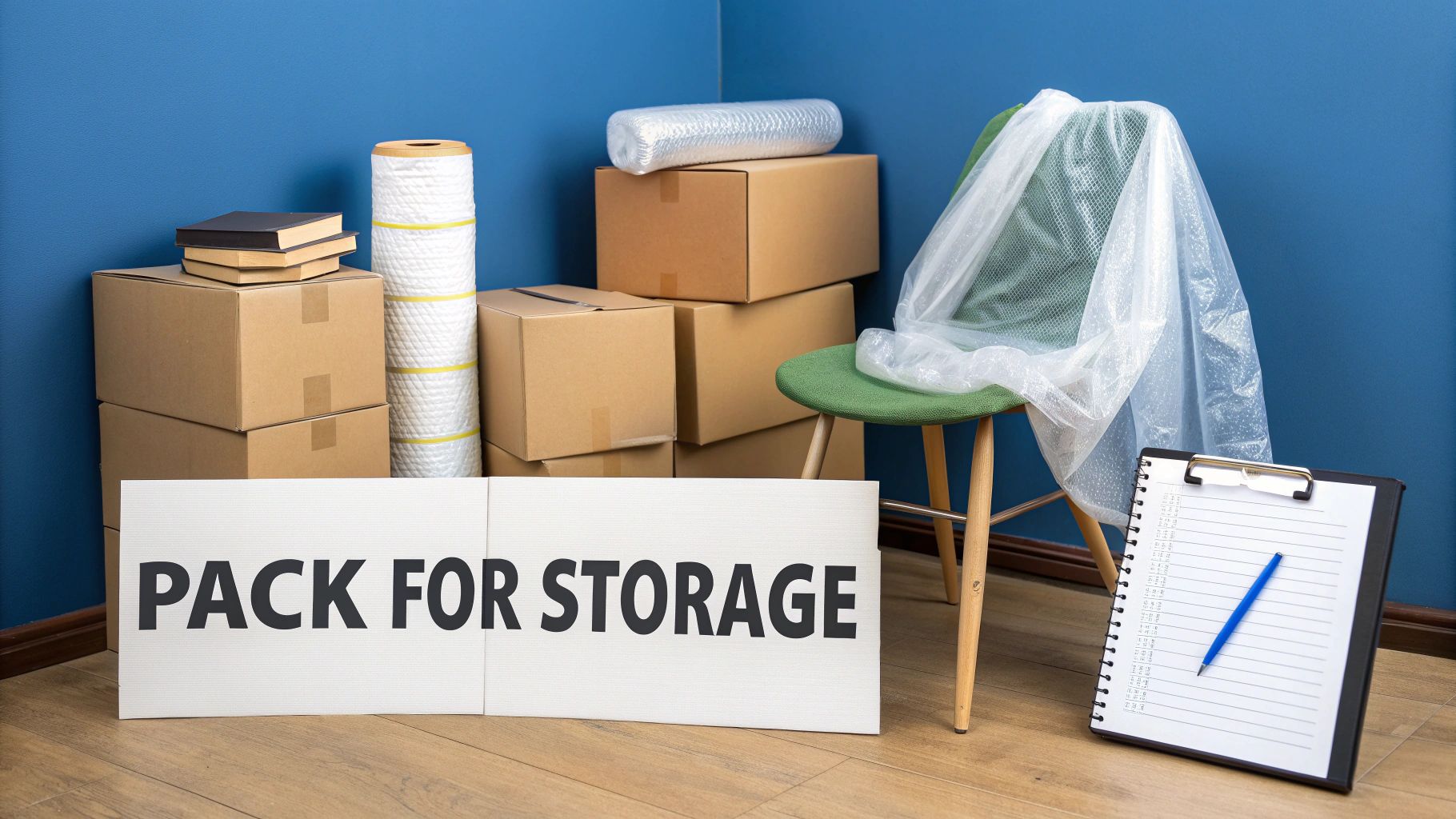
This is about more than just chucking things in boxes. It’s a deliberate process of using the right materials and techniques to fend off dust, damp, pests, and the general wear and tear of time. Let's walk through a clear, practical plan to get it all done properly.
Gathering Your Essential Packing Materials
First things first, let's get your toolkit together. You wouldn't build a house with shoddy materials, and the same logic applies here. Investing in good quality supplies is a small price to pay for the protection of your valuables. Cutting corners on boxes or tape now often leads to crushed containers and damaged goods later.
Here’s what your essential packing kit should look like:
- Sturdy, Double-Walled Boxes: These are a non-negotiable for long-term storage. They’re far stronger than the single-walled variety, meaning they won't buckle when stacked and offer much better protection against humidity.
- High-Quality Packing Tape: Don't dig out that old, brittle roll from the back of the drawer. A good, strong sealing tape is crucial for keeping boxes securely closed and sealed off from dust.
- Bubble Wrap and Packing Paper: These are your go-to for anything delicate. Use packing paper for general wrapping and layering, and save the bubble wrap for an extra cushion of air around breakables like glassware, ornaments, and electronics.
- Furniture Covers: Purpose-made plastic or cloth covers are ideal for shielding sofas, mattresses, and wooden furniture from dust, accidental scratches, and moisture.
- Moisture Absorbers: It’s a great idea to pop a few silica gel packs or other desiccant products inside your unit. You can also place them within boxes that contain anything particularly sensitive to damp.
With these supplies ready, you've laid the groundwork for a successful pack-up.
Step-by-Step Packing for Different Items
Of course, you can't pack a sofa the same way you pack a stack of plates. Different items need different handling. The key is to be methodical and tackle things category by category.
Preparing Furniture and Large Items
Furniture often represents the biggest investment in your storage unit, so it's worth taking the time to prepare it correctly. A little bit of effort now prevents big problems like mould or warping later on.
- Clean Everything Thoroughly: Give every surface a proper wipe-down with an appropriate cleaner. This gets rid of any crumbs that might attract pests and stops grime from becoming a permanent feature.
- Dismantle When Possible: If something can be taken apart—like a bed frame, dining table, or bookcase—do it. Not only does this save a massive amount of space, but it also makes items less awkward to move and prevents legs or corners from getting snapped off.
- Bag the Small Parts: This is a lifesaver! Put all the screws, bolts, and washers for each item into a clearly labelled bag and tape it securely to the main piece of furniture it belongs to. You’ll thank yourself when it's time to reassemble.
- Cover and Protect: Use proper furniture covers or even old blankets to shield everything from dust and scrapes. A word of caution: avoid shrink-wrapping wooden furniture. Plastic can trap moisture against the surface, causing the wood to "sweat," which can lead to warping or damage to the finish.
Key Takeaway: The golden rule for storing furniture and appliances is to make sure they are bone dry before they go into storage. Trapped moisture is the number one cause of mould and mildew, which can completely ruin your belongings.
Packing Fragile Items and Electronics
Anything breakable needs special attention. Your goal is to completely immobilise these items inside their boxes so there’s zero room for them to shift, rattle, or knock against each other.
- Wrap Individually: Every single fragile item, whether it's a plate, a glass, or a picture frame, should be wrapped by itself in packing paper or bubble wrap.
- Pack Plates Vertically: Here’s a pro tip: stack plates on their sides in the box, like records in a crate. They are far more resilient to pressure this way and much less likely to crack.
- Use Original Boxes: If you’ve still got them, the original boxes for your TV, computer, or stereo are your best bet. They were designed to protect those specific items, often with custom-fitted polystyrene inserts.
- Fill the Gaps: Once your items are in a box, stuff any and all empty spaces with crumpled packing paper, packing peanuts, or even soft cloths. The box should be firm, with nothing moving around when you give it a gentle shake.
Storing Clothing and Textiles
When it comes to clothes, bedding, and other fabrics, the biggest threats are damp and pests. The strategy is simple: keep them clean, dry, and sealed away.
- Wash and Dry Everything: Make sure every piece of clothing or linen is freshly laundered and completely dry before it gets packed. Moths and other pests are drawn to dirt, sweat, and food stains.
- Use Wardrobe Boxes for Hanging Items: For suits, coats, and dresses that you don't want to get creased, wardrobe boxes are fantastic. They have a built-in rail that lets clothes hang naturally, preventing deep-set wrinkles over time.
- Vacuum-Seal Bags for Bulky Items: These are a game-changer for bulky things like duvets, pillows, and winter jackets. They compress items down to a fraction of their size and create an airtight, waterproof seal that's impenetrable to moisture and insects.
Following these steps methodically does more than just protect your things; it sets you up for a much simpler and less stressful unpacking process whenever you’re ready to retrieve your belongings.
Understanding Security and Insurance for Your Valuables
When you put your belongings into long-term storage, you’re not just stashing away boxes; you’re entrusting a facility with items that carry real financial and sentimental weight. That’s why genuine peace of mind comes from two layers of protection: robust, on-site security and the right insurance policy.
Getting these two things right is the difference between a worry-free experience and a risky gamble.
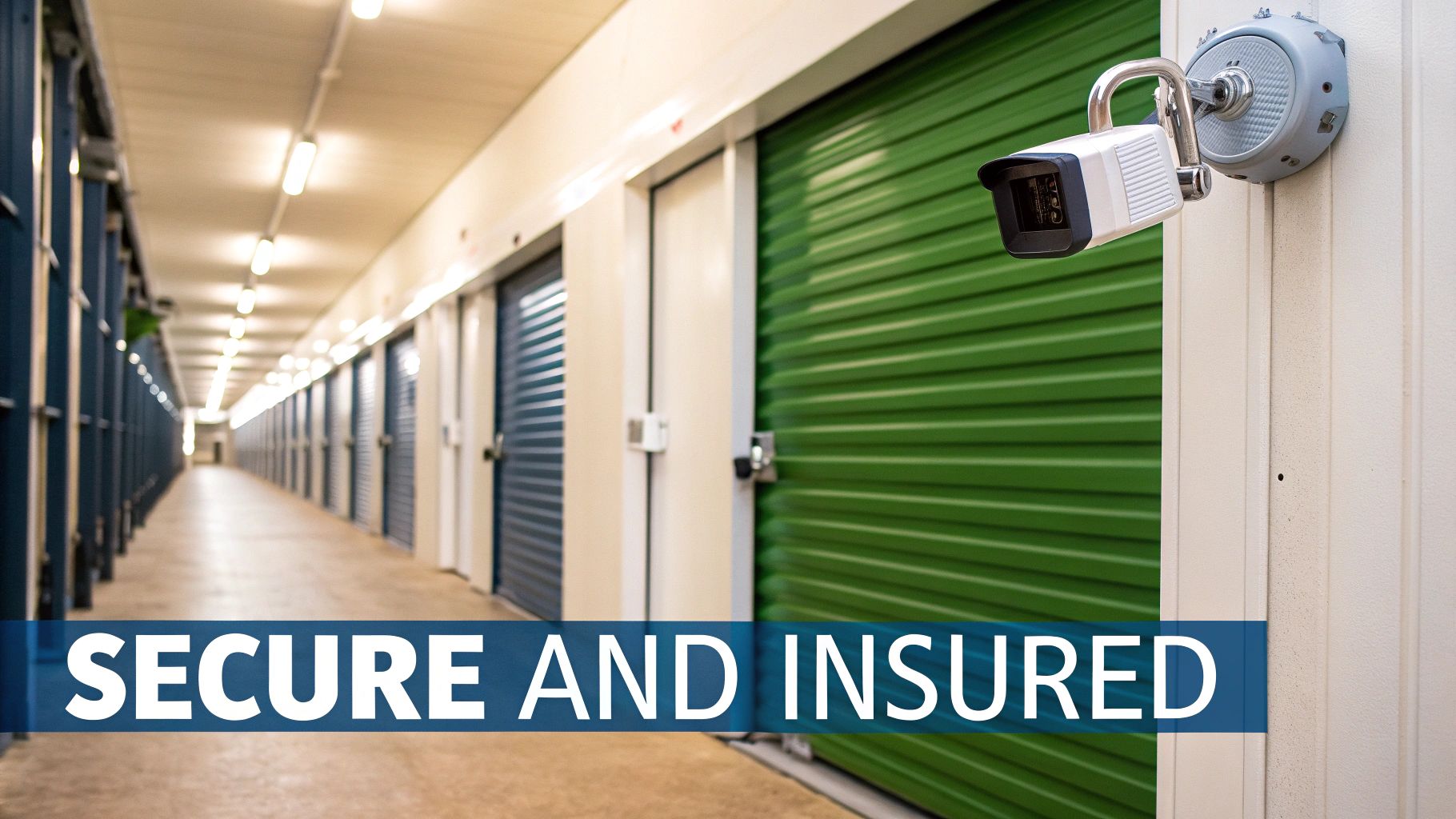
A top-tier facility doesn't just hand you a key and wish you well. It provides a multi-faceted security system designed to protect your possessions around the clock.
Essential Security Features to Look For
Let’s be honest, not all storage facilities are built the same, especially when it comes to security. When you’re looking at a potential site, you should be assessing it as if it were a vault for your most prized possessions. There are a few non-negotiable features that show a real commitment to keeping your things safe.
A truly secure facility is more than just a locked gate. It’s an integrated system that covers all the bases.
Here’s a quick checklist of what you should be looking for:
- 24/7 CCTV Monitoring: Clear, high-definition cameras should cover all the critical spots—entrances, exits, and all the main driveways. This isn't just for show; it’s a powerful deterrent and provides a vital record if anything ever happens.
- Controlled Gate Access: The only people getting onto the site should be authorised customers. This is usually managed with a unique PIN code or a key fob, which means every entry and exit is logged.
- Perimeter Fencing and Good Lighting: A solid perimeter fence is the first line of defence. Combine that with bright, motion-activated lighting across the entire site, and you make the facility a very unattractive target for intruders after dark.
- Individually Alarmed Units: For the ultimate protection, some facilities offer units with their own alarms. If someone tampers with your specific unit door, an alarm is triggered, giving you a direct alert.
These features all work together, creating a security network that’s tough to beat. To see what this looks like in practice, you can learn more about finding secure storage near you and what to expect.
Why Storage Insurance is a Vital Safety Net
While great security massively reduces the risk of theft, it can’t stop everything. Things like fire, floods, or other unexpected events can still happen. This is where storage insurance steps in, acting as an essential safety net to protect the financial value of your belongings.
A lot of people assume their home insurance will cover their items in storage, but that’s rarely the case. Most policies offer very limited cover for goods stored off-site, and often exclude the specific risks you might find in a storage environment.
It's a common myth that the storage facility’s insurance covers your belongings. In reality, their insurance protects the building, not what’s inside your unit. You will almost always need to arrange your own cover.
That’s why specialist self-storage insurance exists. It’s designed specifically for this job, providing cover for a whole range of situations that standard policies might not touch.
What a Good Insurance Policy Should Cover
When you’re looking at an insurance policy, you need to know exactly what you’re protected against. A strong policy means you won’t be left out of pocket if disaster strikes.
A good policy for long-term storage should typically cover:
- Theft: Protection if your unit is broken into.
- Fire and Explosions: Cover for any damage caused by fire, lightning, or explosions.
- Flooding and Water Damage: Absolutely essential protection against leaks, burst pipes, or natural floods.
- Vermin Damage: Protection from any damage caused by pests like rats, mice, or insects.
- Natural Disasters: Cover for events like major storms or earthquakes.
Before you take out a policy, you’ll need to work out what your items are worth. The best way to do this is to create a detailed inventory and estimate the replacement cost for everything. It's always better to slightly overestimate than to find yourself underinsured. Taking this final step ensures your valuables are fully protected for their entire stay.
Getting to Grips with Long-Term Storage Costs and Contracts
Let's talk money. Understanding the costs and the contract is crucial before you commit to long-term storage. It’s not as complex as it might seem, but knowing what goes into the price and what your agreement actually says will give you peace of mind and help you budget properly.
The monthly price tag for a storage unit comes down to a few key things. Size is the most obvious one – bigger units cost more. Simple. But location is just as important. For example, storage prices in a busy area like Slough will likely be different from those in Leeds or Bristol because of local demand and property costs.
Special features also play a part. A climate-controlled unit, which is a must-have for protecting delicate items from the damp UK weather, will command a slightly higher price than a standard drive-up unit of the same dimensions. Think of it as a small extra investment to protect your most precious belongings.
How Committing for Longer Can Save You Money
Here’s a great tip for anyone planning ahead: one of the biggest financial perks of long-term storage is the chance to get a discount. While a rolling monthly contract gives you flexibility, you can often unlock some serious savings by committing to a longer stay.
Most storage facilities, including us, are happy to offer a better deal if you prepay for a set period. Paying for six or even twelve months in one go can noticeably lower your effective monthly rate. It’s our way of rewarding your commitment, and it gives you a fixed cost for the year ahead. This is perfect if you're storing things during a lengthy house move or while you’re abroad.
When you know you’ll need storage for a while, it always pays to ask about prepayment discounts. Committing upfront can make an affordable solution even better value, freeing up your budget for other things.
It’s a straightforward way to manage your finances, especially when you’re certain you won’t need to get to your items for quite some time.
Factoring in the Other Bits and Bobs
Your monthly rental is the main outlay, but it’s smart to be aware of a couple of other potential costs to build a complete picture. These are usually small, one-off expenses that make sure everything is secure and sorted from the very beginning.
Here’s what else you might need to budget for:
- Security Deposit: This is a standard, refundable deposit. We hold it while you use the unit and give it back in full when you leave, as long as the unit is clean and undamaged.
- Insurance: As we’ve mentioned, having your own insurance is non-negotiable. The premium will simply depend on the total value of the goods you’re storing.
- A Decent Padlock: You’ll need to bring your own padlock. This is a good thing – it means you are the only person who can access your unit.
Knowing about these extras means there are no nasty surprises. If you're working to a tight budget, it’s always a good idea to shop around. You can find out more about getting cheap storage units near me to compare your options and secure the best deal.
Reading the Small Print: Your Rental Agreement
Finally, make sure you take a few minutes to read your rental agreement properly. This is the document that lays out everyone's rights and responsibilities – yours and the facility's. It will cover everything from payment dates and the notice period you need to give before moving out, to the rules on what you can and can’t store. A clear, straightforward contract is the hallmark of a professional company, giving you total clarity from day one.
Your Local Storage Solution with Admiral's Yard
Choosing the right facility is arguably the most important decision you'll make when putting items into storage for the long haul. Here at Admiral's Yard, we've built our reputation on providing straightforward, secure, and accessible long term storage across our sites in Bristol, Leeds, and Slough. We’re proud to be a trusted partner for countless local households and businesses.
Our promise is simple: to give you a safe, clean, and convenient space you can count on. We get it. You're not just storing stuff; you're entrusting us with parts of your life or your business. That's why we've focused on the features that truly matter when your belongings are going to be with us for a while.
Why Choose Admiral's Yard
When you store with us, you're getting more than just a unit; you're getting peace of mind. We've designed our facilities specifically for security and ease of use, delivering a service that is both dependable and fantastic value—especially if you're looking to store for six months or longer. Our local teams in Bristol, Leeds, and Slough really understand the community and what our customers are looking for.
Here’s what sets us apart:
- Robust Security: Every Admiral's Yard facility is protected by 24/7 CCTV, comprehensive alarm systems, and controlled gate access. We've created a secure environment so you don't have to worry.
- A Unit for Every Need: From compact lockers ideal for important documents to large-scale units that can hold the entire contents of a house, we'll find the perfect fit for what you need to store.
- Special Long-Term Offers: We believe in rewarding loyalty. Be sure to ask about our special pricing and discounts when you prepay for longer storage periods.
The best way to know if a facility is right for you is to see it with your own eyes. We always encourage a no-obligation tour. It’s a great chance to get a real feel for the space and security we provide, and our friendly on-site staff are always happy to answer any questions you have.
Taking the next step couldn't be easier. Our dedicated teams in Bristol, Leeds, and Slough are ready to give you a personalised quote and help you find the perfect unit for your situation. Whether you're moving house, making space, or archiving business assets, we're here to make your long term storage experience a simple and stress-free one.
You can find more details or get in touch with your nearest facility directly through our site pages for Bristol, Leeds, and Slough. Let us show you why so many people trust Admiral's Yard.
A Few Common Questions About Long-Term Storage
We get it – putting your belongings into storage for a long time can bring up a few questions. To help put your mind at ease, here are some straightforward answers to the queries we hear most often from our customers in Bristol, Leeds, and Slough.
How Often Should I Pop in to Check on My Things?
With long-term storage, you don’t need to be visiting all the time. A quick check-in every three to six months is a good rule of thumb.
This gives you a chance to make sure everything is just as you left it, swap out any moisture absorbers you might be using, and just generally confirm everything is in great condition. It’s a small effort for complete peace of mind.
Is There Anything I’m Not Allowed to Store?
Yes, for the safety and security of everyone, a few items are off-limits. We have to be strict on this to protect all our customers’ belongings.
Think of it this way – if it’s perishable, flammable, or alive, it can’t be stored. This includes:
- Perishable Goods: Any kind of food that can spoil or attract pests.
- Hazardous Materials: Things like petrol, paint, gas canisters, or fireworks. Basically, anything flammable, corrosive, or explosive.
- Living Things: This one’s simple – no plants or animals.
- Illegal or Stolen Goods: Any item that is against the law to own cannot be stored on our premises.
If you’re ever in doubt about a particular item, just have a quick chat with our team on-site. They’ll be happy to give you a clear answer.
Can I Keep a Vehicle in Storage Long-Term?
Absolutely. Storing vehicles is one of our most popular services. Our secure, drive-up units are perfect for keeping cars, motorbikes, or even classic vehicles safe and sound for months or years. It’s a great way to protect your vehicle from the unpredictable British weather and free up your driveway.
What’s the Notice Period for Moving Out?
You’ll find the exact notice period detailed in your rental agreement, so there are no surprises. Giving us a heads-up just helps us ensure the move-out process is completely seamless for you. It allows us to get your account finalised and sort out the return of your security deposit without any delays.
Ready to find a secure home for your belongings? The team at Admiral's Yard Self Storage is here to help you find the perfect long-term storage solution in Bristol, Leeds, or Slough. Come see us online to get a personalised quote and check out our competitive rates today at https://admiralsyard.co.uk.