

When you start looking into UK self-storage costs, you'll see a pretty wide spectrum. A small locker might only set you back £8 a week, while a large unit big enough for business stock could be more than £50 a week. What you actually end up paying comes down to a few key things: the size you need, where you are, and how long you plan to store your belongings.
Let's break it down so you can figure out a realistic budget.
Average UK Self Storage Costs by Unit Size
To give you a clearer idea of what to expect, the table below outlines the typical weekly and monthly costs for some of the most common unit sizes across the UK. Keep in mind these are estimates, but they're a great starting point for your planning.
| Unit Size (sq ft) | Typical Use Case | Estimated Weekly Cost (£) | Estimated Monthly Cost (£) |
|---|---|---|---|
| 10 – 25 | Boxes, student belongings, small personal items | £8 – £15 | £32 – £60 |
| 35 – 50 | Contents of a studio or 1-bedroom flat | £20 – £35 | £80 – £140 |
| 75 – 100 | Contents of a 2-bedroom house, business archives | £30 – £50 | £120 – £200 |
| 150+ | Contents of a 3-4 bedroom house, business stock | £50+ | £200+ |
As you can see, the price scales logically with the amount of space you need. This helps you balance your storage needs against your budget, ensuring you only pay for the space you'll actually use.
What Shapes the Price Tag?
So, why the big range in prices? It's not just about the size of the room. A few other important factors influence the final quote you'll get from any storage provider.
Here’s a quick visual breakdown of what you can generally expect to pay per week for different tiers of storage space.
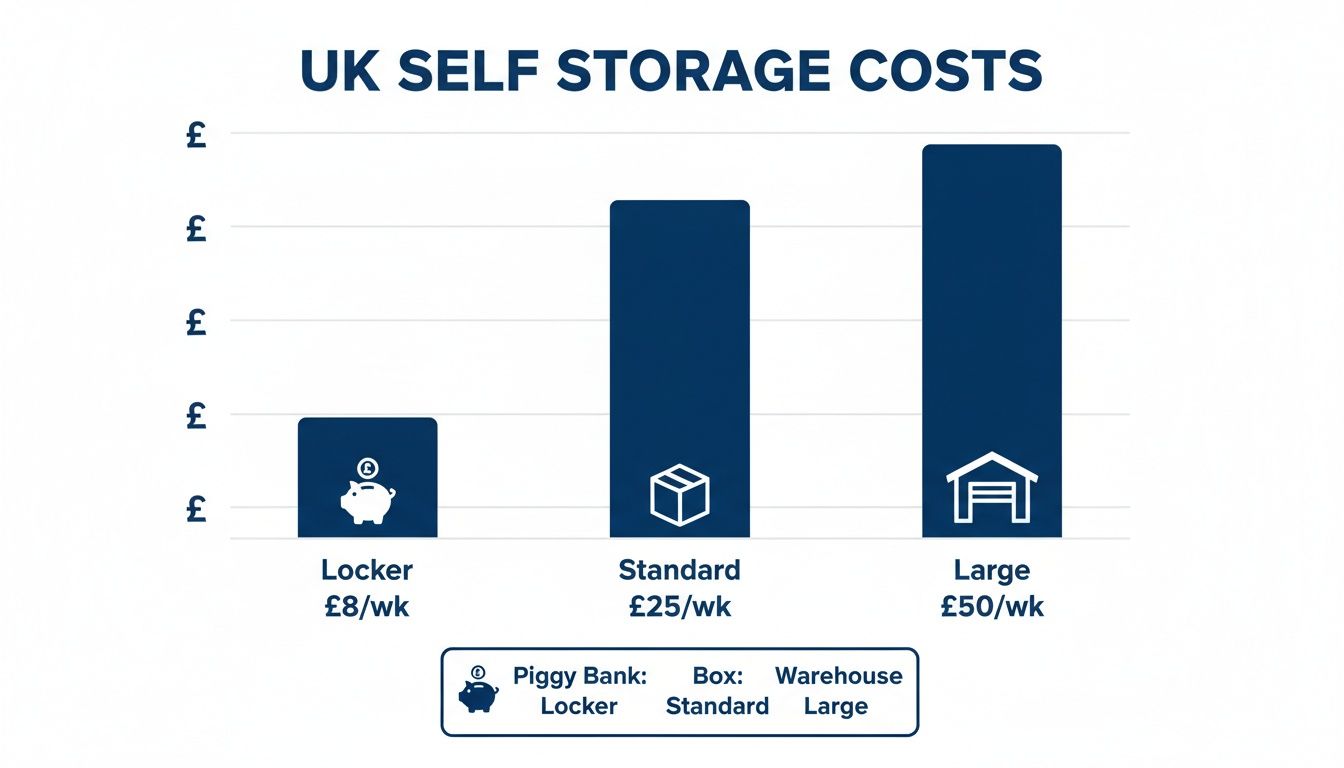
The chart shows quite clearly how a standard unit costs about three times what you'd pay for a basic locker. But beyond size, here's what else is at play:
- Location, Location, Location: Just like with property, a storage unit in central London will naturally cost more than one in a quieter, less urban area.
- Size Matters: This is the most obvious one. The more square footage you rent, the higher your weekly or monthly bill will be.
- Length of Your Stay: Many facilities offer better rates if you commit to a longer-term contract. It's often cheaper per month to store for a year than for just a few weeks.
- Convenience & Features: You'll often pay a bit more for premium features. A ground-floor unit you can drive right up to will command a higher price than one on an upper floor that requires a lift.
It's also worth knowing about all the different solutions out there. For instance, some people find that individual tenant storage lockers are a better fit for smaller needs. The real trick is to weigh up the cost against what's most important to you, whether that's 24/7 access, top-tier security, or just the best long-term value.
What Really Goes Into Your Storage Price?
Ever looked at two storage units of the same size and wondered why the prices are so different? It’s a bit like booking a flight or a hotel – the final cost isn't just about one thing. Several factors come together to determine the price you pay.
Getting to grips with what drives these costs means you can make a smarter choice. You'll know exactly what you're paying for and can decide what’s most important for your situation, whether that’s sheer convenience, a prime location, or simply the best deal.
Let's pull back the curtain on the five main elements that shape your final quote.
Location: It’s All About Postcode
Just like the property market, location is king in the world of self storage. A unit in a busy, high-demand area like Slough or central London is always going to cost more than one tucked away in a quieter, more suburban spot.
It all comes down to basic economics. Land is more expensive, business rates are higher, and demand is greater in major urban hubs, so storage providers in those areas have to charge more. In contrast, facilities in places like Leeds or Bristol can often offer more competitive prices while still being perfectly accessible.
As a rule of thumb, the closer you get to a major city centre, the more you can expect to pay per square foot. If you don't need daily access, looking at facilities just a little further out can often unlock some serious savings.
Unit Size: Don't Pay for Empty Air
This one’s the most obvious factor. You wouldn't expect a studio flat to cost the same as a three-bedroom house, and storage is no different. Bigger units cost more. The real trick is to make sure you're not booking more space than you actually need.
So many people overestimate how much room their belongings will take up, and end up paying for it every month. Before you commit, it's always a good idea to use an online space calculator or have a quick chat with the facility's team. They've seen it all and can give you a pretty accurate idea of the size you'll require. A little planning goes a long way here; for example, using good quality, stackable containers with handles can make a massive difference, letting you pack more into a smaller, and therefore cheaper, unit.
Access Type: Convenience Comes at a Price
Not all storage units are created equal when it comes to convenience, and this is definitely reflected in the price. Think of it like parking your car. A private, reserved spot right by your front door is the premium option, whereas a space in a public car park down the road is the budget-friendly choice.
In storage, you generally have two options:
- Drive-Up Units: These are the gold standard for convenience. Located on the ground floor, they let you pull your car or van right up to the door. This makes loading and unloading heavy items, like furniture or business stock, an absolute breeze. That ease of access means they command a higher price.
- Internal Units: These units are inside the main building, sometimes on upper floors accessed by lifts or stairs. They take a little more effort to get to, but they're a much more economical option and are just as secure.
The right choice really depends on your needs. If you'll be in and out all the time, the extra cost for a drive-up unit might be money well spent.
Security Features: Paying for Peace of Mind
The level of security at a facility also has a direct impact on your quote. A very basic site might just offer a padlock on your door, but a top-tier provider invests in layers of protection.
It’s a bit like securing your home. You can have a simple burglar alarm, or you can go for a more comprehensive system with 24/7 CCTV, perimeter fencing, and electronically controlled gate access.
Facilities with these more robust security systems often have slightly higher rental rates. What you're buying, though, is invaluable peace of mind. For many people, knowing their possessions are protected around the clock by modern technology is a non-negotiable.
Contract Length: Loyalty Pays Off
Finally, how long you plan to store for can make a real difference to your monthly bill. It works in a similar way to a mobile phone plan – commit to a longer-term contract and you’ll usually get a better monthly rate than you would on a flexible, pay-as-you-go deal.
If you know you’re in it for the long haul, perhaps for business archiving or during a big home renovation, it’s always worth asking about long-term discounts. Many facilities will offer a reduced rate if you commit to six or twelve months upfront. On the other hand, if you need maximum flexibility, a short-term rental is perfect, but it will likely come with a slightly higher weekly or monthly price tag.
A Regional Guide to UK Storage Prices

When you start looking into self storage, you’ll quickly find that your postcode plays a massive role in the price you pay. It’s a bit like the property market—the cost of a storage unit can vary wildly from one city to the next. Getting a handle on these regional differences is the first step to setting a realistic budget.
The logic behind it is simple supply and demand. In places where land is expensive and the population is dense, the costs of running a storage facility are just plain higher. Those costs, from rent to business rates, inevitably get passed on to you, the customer.
Let's break down what you can expect to pay across the UK.
H3 London and The South East: The Premium Postcodes
No surprises here: London and the wider South East are the most expensive places in the UK to rent a storage unit. The combination of intense demand and the country's highest property prices creates a market where space comes at a serious premium.
You can expect a standard 50 sq ft unit in a central London borough or a busy commuter town like Slough to cost 20-40% more than the exact same-sized unit elsewhere. It’s the price you pay for convenience in the nation's economic powerhouse.
For those living in the area, it often comes down to a choice: pay a premium for a facility on your doorstep, or travel a little further out to find a better deal.
H3 The Midlands: A Competitive Middle Ground
The Midlands often hits the sweet spot for self storage. Major cities like Birmingham, Nottingham, and Leicester have plenty of demand, but the operating costs for facilities are much more reasonable than down south.
This has created a really competitive market, meaning you can find top-notch facilities without the eye-watering price tag. A typical 50 sq ft unit here will generally cost less than in London but a little more than you might find in the North.
It’s this balance of good access and fair pricing that makes the Midlands a go-to for so many people, whether for personal or business storage.
A key takeaway for anyone researching 'how much does self storage cost UK' is that a short drive can often lead to significant savings. Comparing prices between a city centre location and one on the outskirts can reveal surprising differences in cost.
H3 The North and Beyond: Finding Excellent Value
As you head north to cities like Manchester, Leeds, and Sheffield, you’ll generally find the most competitive self storage prices in the UK. Lower land values and business rates mean facilities can offer fantastic value for money.
This doesn't mean you're compromising on quality, though. The best facilities still offer modern, secure units with all the bells and whistles—just at a more approachable price. For instance, a facility like Admiral's Yard in Leeds gives you a great location and easy access without the premium you’d face further south.
To give you a clearer idea, here’s how the numbers stack up for a standard 50 sq ft unit across the country.
H3 Regional Price Comparison for a 50 sq ft Storage Unit
The table below gives you a rough guide to the average weekly cost for a 50 sq ft unit, which is a popular size for storing the contents of a one-bedroom flat.
| Region | Average Weekly Cost (£ Low End) | Average Weekly Cost (£ High End) |
|---|---|---|
| London & South East | £30 | £45+ |
| The Midlands | £25 | £38 |
| The North of England | £22 | £35 |
As you can see, where you live makes a huge difference. This is why locations like Bristol and Leeds, where Admiral's Yard has sites, are so ideal. They offer the buzz and convenience of a major city while still delivering the competitive, value-driven pricing that makes sense for your budget.
Seeing the Numbers in Action: Real-World Scenarios

It’s one thing to talk about square footage and location, but it’s another to see how it all comes together in real life. Let’s walk through three common situations to give you a clearer picture of what you can expect to pay for self storage.
These examples show how different needs—from unit size to rental duration—shape the final cost, helping you connect the dots for your own situation.
Case Study 1: The Student Mover
Meet Sarah. She’s a university student in Bristol and needs to clear out her room for the three-month summer holiday. Rather than dragging everything home, she needs a simple, local spot for her books, clothes, a small desk, and a few boxes.
A massive unit would be overkill. Sarah just needs a 25 sq ft space, which is perfect for the contents of a student room. Since it’s only for a fixed period, a short-term, flexible agreement is exactly what she’s looking for.
Here's the breakdown:
- Unit Size: 25 sq ft
- Location: Bristol (more affordable than London)
- Duration: 3 months (12 weeks)
- Access: A standard internal unit, as she won’t need daily access.
In Bristol, a 25 sq ft unit costs around £15 per week. So, for the whole 12-week summer break, her total spend comes to £180. It’s a straightforward and cost-effective solution compared to the hassle and expense of hiring a van to move her things twice.
Case Study 2: The Family in Transition
Now for the Thompsons. They're in the middle of a house move in Leeds, having sold their three-bedroom home. The catch? There's a two-month gap before they get the keys to their new place. They need to store pretty much everything they own.
They're going to need a much bigger space for sofas, beds, wardrobes, and all the boxes that come with a family home. A 150 sq ft unit will do the job nicely. To make the moving day as painless as possible, they’ve opted for a drive-up unit, allowing the removal lorry to pull right up to the door for easy unloading.
Here's the breakdown:
- Unit Size: 150 sq ft
- Location: Leeds (a major northern city with competitive pricing)
- Duration: 2 months (8 weeks)
- Access: Premium drive-up unit for maximum convenience.
Given the larger size and the convenience of drive-up access, a 150 sq ft unit in Leeds might cost about £55 per week. For their two-month stay, the Thompsons are looking at a total of £440. It’s a secure, easily accessible solution that takes a huge weight off their shoulders during a stressful time. And to make the move even smoother, investing in quality packing materials like our recommended ABS rigid suitcases with 360-degree wheels can make all the difference.
Case Study 3: The E-commerce Entrepreneur
Finally, let’s look at David. He runs a growing online candle business from his home near Slough. His stock is quickly outgrowing his spare room, and he needs a professional storage solution that’s both scalable and affordable.
David needs to get to his inventory regularly to pack orders, but he doesn't need a warehouse-sized space just yet. A 75 sq ft unit is the perfect fit. He knows he’ll need it for the foreseeable future, so he’s happy to commit to a longer-term rental to get a better rate.
Here's the breakdown:
- Unit Size: 75 sq ft
- Location: Slough (higher-cost, but crucial for his logistics)
- Duration: 12 months (long-term contract)
- Access: A standard internal unit is perfectly fine.
A 75 sq ft unit in a location like Slough might usually go for £45 per week. But by signing up for a full year, David gets a 15% long-term discount, which drops his weekly cost to just £38.25. Over 12 months, his total comes to £1,989.
This is where self storage really shines for businesses. Traditional commercial warehousing comes with eye-watering costs, long leases, and huge overheads. Self storage offers a flexible, scalable, and far more affordable way to operate.
For a small or medium-sized business, the ability to save 40-60% compared to a traditional warehouse is a genuine game-changer. It's no wonder over 680,000 UK firms already use this model. At Admiral’s Yard, we take this a step further with clear pricing, comprehensive StoreProtect cover, and handy tools like our online space calculator to make sure you get exactly what you need.
How to Spot and Avoid Hidden Fees
That headline price for a storage unit can look like a fantastic deal. You see a low weekly rate, maybe a flashy introductory offer, and think you've found a bargain. But hold on a moment. The price you first see often isn't the full story.
To get a real handle on what self storage costs, you have to dig a little deeper than that initial quote. Some providers have a knack for adding extra charges that can quickly inflate your final bill, and these aren't always spelt out in big, bold letters. It pays to know what to look for before you sign on the dotted line.
Common Hidden Costs to Watch Out For
An attractive weekly rate can lose its shine fast once you start tacking on the extras. It’s a classic bait-and-switch, and a lot of people get caught out.
Here are the four most common extra fees to keep on your radar:
- Mandatory Insurance: Storing your goods without insurance is a bad idea, and most places rightly insist on it. The catch? Some facilities will only let you buy their own in-house policy, which might be more expensive than other options. Always ask if you can use your home insurance or arrange your own cover elsewhere. It could save you a fair bit.
- Security Deposits: This is pretty standard practice. You pay a refundable deposit upfront to cover any potential issues. The crucial part is understanding exactly what those issues are. Make sure you’re clear on the conditions for getting your money back in full – what counts as "damage," and what happens if you end the contract early?
- Admin Fees: You might see this listed as a "setup" or "joining" fee. It’s a one-off charge for the paperwork and getting you into their system. Not every company does this, but if they do, you need to factor it into your total first-month cost.
- Padlock Costs: This one seems small but it adds up. For security reasons, many sites require a specific type of heavy-duty padlock. More often than not, you'll have to buy it directly from them, and it won't be cheap. Don't just assume you can pop down to the hardware store and grab any old lock.
The Introductory Offer Trap
Here’s another classic move: the post-promotional price hike. You see a brilliant "first month for £1" offer and jump at it. But what’s the price in month two? Some companies will ramp up the rate dramatically as soon as that initial deal is over, leaving you paying far more than you budgeted for long-term.
Always ask what the standard, non-promotional rate will be for your unit. A transparent provider like Admiral's Yard will give you a clear, straightforward price without confusing introductory deals designed to obscure the true cost.
Your Pre-Rental Checklist
The best way to protect yourself is to go in armed with the right questions. Before you commit to anything, get clear, written answers to these points. It’ll save you a lot of headaches later.
- What’s the standard price for this unit after the special offer ends?
- Do you require a security deposit? If so, what are the exact terms for getting it back?
- Are there any one-off admin or setup fees I should know about?
- Do I have to have insurance? Can I use my own, or do I have to buy yours? What does your policy cost?
- Will I need to buy a specific padlock from you? How much is it?
- What’s the notice period if I want to move my things out?
Asking a few simple questions like these puts you in control. It lets you compare the total cost from different places, not just the headline price, and helps you find a company that believes in honest, upfront pricing.
Getting the Best Value from Your Storage Unit
Finding a great deal on self-storage isn't just about hunting down the lowest weekly price. It’s about being smart with your planning so that every pound you spend gives you exactly what you need—without cutting corners on security, quality, or convenience.
A little bit of prep work before you book can make all the difference. You might find you can get away with a smaller, cheaper unit or even snap up a great discount. It puts you in the driver's seat, ready to find the right solution for your budget.
Accurately Estimate Your Space Needs
Honestly, the biggest mistake we see people make is overestimating how much space they need. It’s an easy trap to fall into, and it means you end up paying to store empty air.
Before you even start looking for quotes, take a proper inventory of what you plan to store. A good online space calculator is your best friend here. These tools let you list everything from sofas to document boxes and then give you a solid recommendation for the right unit size. Taking five minutes to do this could be the difference between paying for a 100 sq ft unit when a 75 sq ft one would have done the job perfectly—saving you money month after month.
Pack Efficiently to Maximise Every Square Foot
How you pack can be a game-changer. Think of it like a real-life game of Tetris: the goal is to make everything fit together with as little wasted space as possible. A well-packed unit often means you can rent a smaller, cheaper size.
Here are a few simple tips to get you started:
- Use uniform boxes: Using sturdy boxes of the same size makes stacking them high and tight much safer and easier. You'll be able to use the full height of the unit without worrying about things toppling over.
- Dismantle furniture: Whenever you can, take apart big items like bed frames, tables, and bookcases. You'd be amazed how much space this frees up.
- Fill empty spaces: Don't let hollow items go to waste. Pack smaller things inside wardrobes, chests of drawers, or even appliances. For clever storage ideas you can use at home too, consider versatile solutions like our multi-shelf fabric and wood units that are brilliant for organisation.
Ask About Discounts and Long-Term Offers
Don’t be shy about asking for a deal. Many storage facilities have offers that aren't always splashed across their homepage. If you know you'll need storage for a while—say, six months or longer—you're in a great position to negotiate a better rate.
Many storage providers, including Admiral's Yard, offer significant savings for customers who commit to long-term rentals. Pre-paying for several months can often unlock the best possible price, reducing your overall cost.
Review Your Insurance Cover
Most facilities will insist you have insurance, but that doesn't always mean you have to buy theirs. First, check your home contents insurance policy. Some policies actually cover your belongings even when they're stored elsewhere. If yours does, you can sidestep paying for another policy you don't need.
If you do need to buy separate cover, make sure you're only paying for the value of what you're actually storing. There's no point in over-insuring your items.
Your Storage Questions, Answered
Let's clear up a few final questions we often hear from people looking for storage. Getting these details straight will help you feel confident that you're making the right choice.
Is Self Storage Insurance Compulsory in the UK?
In a word, yes. Any reputable storage company will insist that your goods are insured. Think of it as a non-negotiable safety net that protects both you and the facility from the unexpected, like fire or theft.
We offer our own comprehensive StoreProtect cover, but it’s always a good idea to check your home contents insurance policy first. Some policies will cover items stored away from home, but you'll need to confirm the specifics to make sure you're not left under-insured.
What’s the Shortest Time I Can Rent a Unit For?
Flexibility is key, and many places will rent you a unit for as little as one week. That said, the industry standard for a minimum rental period is usually one month.
Short-term hires are perfect if you're between houses, but if you know you'll need the space for a while—say, six months or more—ask about long-term discounts. You can often secure a much better rate.
Is There Anything I’m Not Allowed to Store?
Definitely. Every storage facility has a strict list of prohibited items, and it's all about safety and legality. You can't store anything that's dangerous, illegal, or that could cause problems for other customers' belongings.
As a rule of thumb, this means no:
- Flammable or hazardous materials like petrol, paint, or gas canisters
- Perishable food that might attract pests
- Illegal substances or stolen property
- Firearms, ammunition, or explosives
- Living things, like plants or animals
Always have a quick chat with the facility manager or check your agreement before you move in. It’s the easiest way to ensure a safe and secure environment for everyone.
Ready to find a secure, affordable, and straightforward storage solution? The team at Admiral's Yard Self Storage is here to help you find the perfect unit with no hidden fees. Get your free, no-obligation quote today!