

Getting your packing right starts long before you ever seal the first box. It all begins with gathering your supplies. At a minimum, you’ll need a good stock of sturdy cardboard boxes in different sizes, strong packing tape, some form of cushioning like bubble wrap or packing paper, and a couple of decent marker pens for labelling. Think of this as your foundational toolkit for a smooth, stress-free move.
Building Your Essential Packing Toolkit
Every successful packing job, whether for moving house or putting things into storage, starts with getting the right gear together. It’s a bit like getting all your ingredients prepped before you start cooking – it just makes the whole process run more smoothly and avoids those last-minute panic trips to the shop. Investing in good quality materials isn't just an extra cost; it's the best insurance policy you can get for your belongings.
The right toolkit can be the difference between a box of shattered plates and a perfectly intact dinner service. It prevents damage, makes organising a breeze, and ensures everything arrives at its new home (or your Admiral's Yard storage unit) in the same condition it left in.
Why Quality Materials Matter
One of the biggest mistakes people make is trying to save a few quid by using old, worn-out supplies. A flimsy box sourced from the supermarket might seem fine, but it can easily collapse under the weight of your books. Weak tape can give way in transit, leaving the contents of a box exposed. Quality materials are designed to provide the strength and protection needed to handle the bumps and scrapes of moving and storage.
This isn’t just anecdotal; the demand for reliable packaging is booming. The UK's packaging services sector has been growing at a compound annual rate of 8.4% and is on track to be worth a staggering £8.6 billion by 2025. This shows just how many people are realising the importance of proper packing solutions.
Choosing high-quality materials for packing is the single most effective way to protect your possessions. It’s the difference between hoping your items survive a move and ensuring they do.
To help you get started, here's a quick rundown of the absolute essentials for your packing toolkit.
Your Essential Packing Toolkit at a Glance
| Material | Primary Use | Best For |
|---|---|---|
| Cardboard Boxes | Containing and organising items | Grouping items by room; protecting from dust and impacts |
| Packing Tape | Sealing boxes securely | Keeping boxes closed and structurally sound during transit |
| Bubble Wrap/Paper | Cushioning and void-filling | Wrapping delicate items like glassware, electronics, and artwork |
| Marker Pens/Labels | Identifying box contents | Labelling boxes with contents and destination room for easy unpacking |
With these four core items, you have a solid foundation for almost any packing task.
Sourcing Your Supplies
So, where do you get all this stuff? Big hardware stores are an obvious choice, but you can often find a better selection and better prices from specialised suppliers. For instance, knowing how to source reliable food packaging supplies can be surprisingly helpful, as many of these vendors carry high-quality, general-purpose materials perfect for moving.
Your core shopping list should always include:
- A Variety of Boxes: Grab small ones for heavy things like books and files, medium boxes for general household goods, and a few large ones for light but bulky items like duvets and cushions.
- Strong Packing Tape: Don't skimp here. Get a good quality adhesive tape that’s specifically designed for sealing cardboard boxes.
- Protective Cushioning: Bubble wrap is king for fragile items, but packing paper is great for wrapping everyday crockery and filling gaps inside boxes to stop things from rattling around.
- Labelling Tools: A couple of permanent markers and a pack of sticky labels are essential. Trust me, you will not remember what's in that plain brown box three weeks from now.
Choosing the Right Boxes and Containers
Think of packing boxes as the foundation of your move. If you build a house on a weak foundation, you’re asking for trouble. It's the same principle when you're packing – a flimsy box is a disaster waiting to happen, especially when you start stacking them inside a removal van or one of our Admiral’s Yard storage units.
It’s tempting to grab any old box, but that one-size-fits-all approach is a common mistake. For lighter, softer things like cushions, clothes, or bedding, a standard single-wall cardboard box will do the job just fine. They're affordable and don't add unnecessary weight.
But when it comes to heavier items, you need to bring in the reinforcements. Double-wall boxes, with their two layers of corrugated cardboard, offer far greater strength and rigidity. For things like books, kitchen appliances, tools, or electronics, these are non-negotiable. A double-wall box is far less likely to buckle under the weight or split at the seams when you least expect it.
Matching the Box to the Item
Choosing the right container is about more than just how thick the cardboard is. Certain items have unique needs, and using a specialised box can save you a world of hassle and heartache down the line. A little forethought here really pays off.
Here are a few essential types to have on your radar:
- Wardrobe Boxes: These are basically portable mini-closets. They’re tall boxes with a hanging rail inside, perfect for moving suits, dresses, and coats without them ending up a creased mess at the other end.
- Archive Boxes: If you’re storing important paperwork, client files, or business records, these are a must. They come with built-in lids, are designed for easy stacking, and make finding what you need later a simple task.
- Dish Pack Boxes: For fragile kitchenware like plates, bowls, and glasses, these often include cardboard dividers. That extra internal structure is brilliant for stopping delicate items from knocking against each other and chipping or shattering in transit.
If you’re ever unsure, this simple flowchart can point you in the right direction.
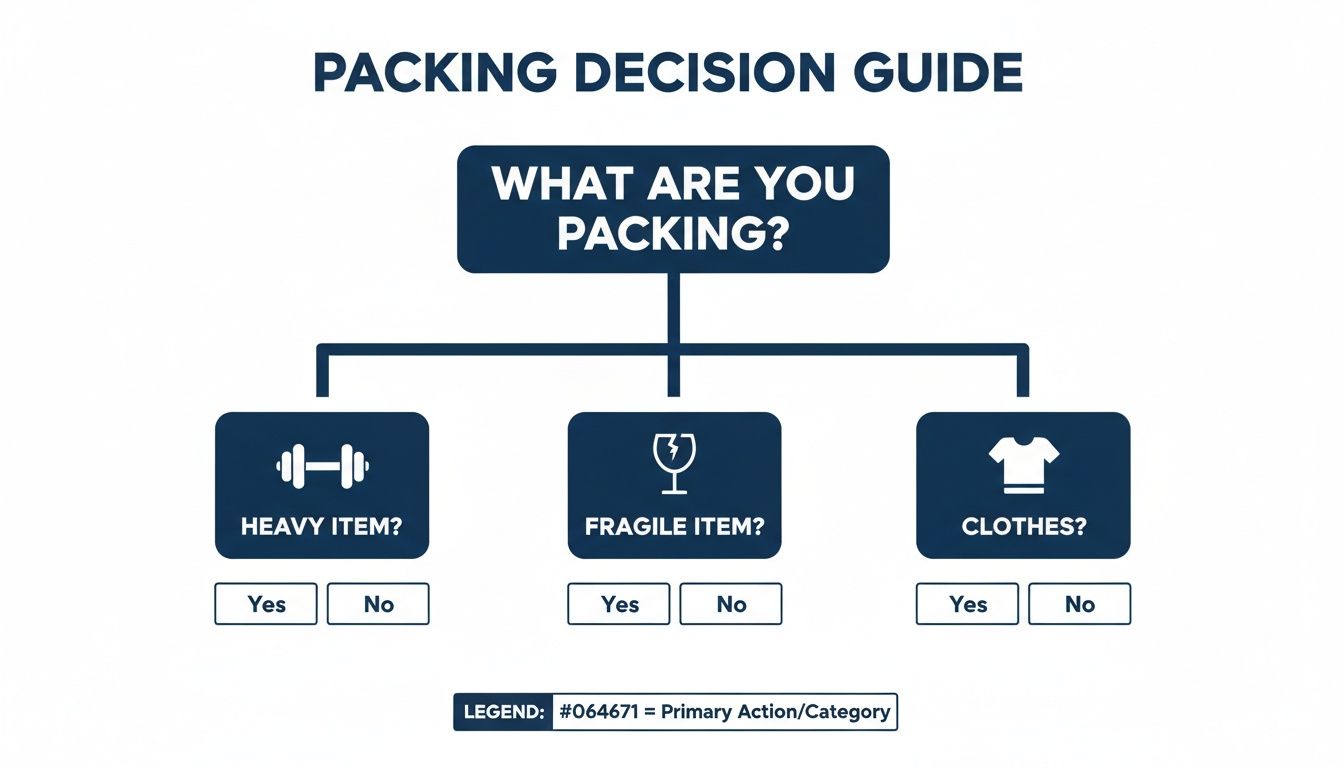
As you can see, the nature of the item—whether it's heavy, fragile, or an item of clothing—should always guide your choice of box and protective wrapping.
Reusable and Long-Term Solutions
While cardboard is the go-to for most people, it's not your only option. If you’re looking for something more durable and sustainable, reusable plastic totes are a fantastic investment. These tough containers are waterproof, crush-proof, and can be used over and over again.
Reusable plastic totes are particularly well-suited for long-term storage, as they offer superior protection against moisture, dust, and pests. They are a smart choice for securing valuables in your Admiral's Yard unit.
They're ideal for storing things like seasonal clothing, business inventory, or sentimental keepsakes that you intend to keep safe for a long time. While they cost more upfront, their sheer longevity often makes them the more economical choice in the long run. When you’re ready to start, we have a selection of quality double-walled cardboard boxes and moving kits to get your project off to a solid start.
Ultimately, your goal is to create a secure, stable load that can be moved and stacked with confidence. To do that, you need the right tools for the job, which starts with knowing where to find the best moving boxes from suppliers you can trust. By taking a moment to match each item to the right container, you're building that solid foundation that will protect your belongings from start to finish.
Mastering Protective Wraps and Cushioning
The secret to keeping your treasured possessions safe isn't just about the box you put them in. It's about what goes on inside that box. While a sturdy container is your first line of defence, it's the wraps and cushioning that act as shock absorbers, protecting everything from delicate glassware to expensive electronics. These materials are the unsung heroes of any successful move or storage project.
Think of it this way: the box is the bodyguard, but the cushioning is the custom-fitted armour. Without it, even the strongest box won't stop items from rattling against each other or cracking under the pressure of a sudden jolt. Knowing which material to use and, more importantly, how to use it, is the key to ensuring your belongings arrive in one piece, whether they're going across town or into a secure unit at one of our Bristol, Leeds, or Slough locations.
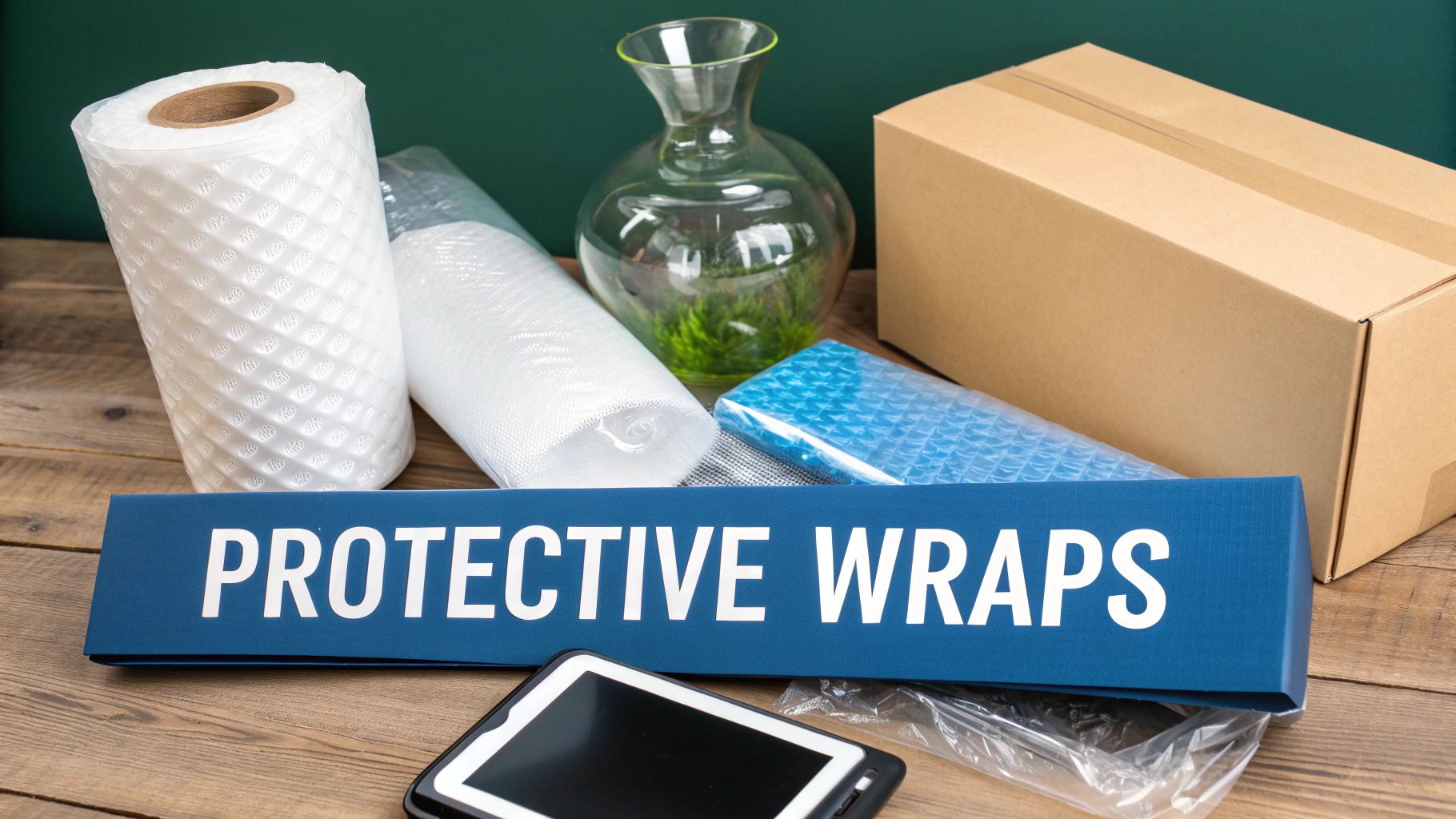
Choosing Your Protective Material
Not all cushioning is created equal, and each type has a very specific job to do. Matching the right material to the task at hand is what separates an amateur packing job from a professional one—and it dramatically cuts down the risk of breakages.
Here’s a rundown of the most common and effective materials you'll need:
- Bubble Wrap: It’s a classic for a reason. Bubble wrap is your go-to for anything highly fragile, offering superb protection. Those little air-filled pockets are brilliant at absorbing impact, making it essential for glassware, china, picture frames, and electronics.
- Packing Paper: This is your packing toolkit's most versatile player. Plain, ink-free packing paper is perfect for wrapping everyday items like plates and mugs to give them a basic layer of scratch protection. Its other crucial role is to be scrunched up and used to fill any empty gaps, or voids, inside a box.
- Foam Sheets/Pouches: When you're dealing with ultra-delicate surfaces, foam provides a soft, non-abrasive cushion that won't leave a mark. It's fantastic for separating plates or protecting the screens of TVs and monitors from scratches. We also offer more specialised options, like our polystyrene foam hemispheres, for very specific cushioning needs.
Common Mistakes to Avoid
One of the most common—and costly—mistakes we see is people using the wrong kind of paper. It’s tempting to grab old newspapers to save a bit of cash, but the ink can easily transfer onto your items. This can leave stubborn stains on light-coloured fabrics, porcelain, or painted surfaces that are a nightmare to remove. Always stick to clean, ink-free packing paper.
Another frequent error is under-filling boxes. Any empty space gives your belongings room to shift, slide, and collide during transit. This movement is the number one cause of damage. You must fill every gap with scrunched-up paper or other void-fill materials to create a snug, stable environment for everything inside.
The goal of cushioning is twofold: to protect an item's surface and to eliminate all movement within the box. If you can hear things rattling when you gently shake a sealed box, you need to open it back up and add more fill.
Professional Wrapping Techniques
You don't need to be a professional packer to get professional results. Just a few simple techniques can make a world of difference, ensuring your cushioning materials are used effectively for maximum defence against knocks and bumps.
Follow these best practices for superior protection:
- The Double-Wrap Method: For extremely delicate items like crystal glasses or antique ornaments, wrap them first in a sheet of soft packing paper to protect the surface. Then, add a generous layer of bubble wrap over the top for impact absorption.
- Layering in Boxes: When packing a box with multiple fragile items like plates, always start with a thick, cushioned layer of scrunched paper at the bottom. Put the heaviest items in first, and use foam sheets or even cardboard dividers between each one.
- Taping Bubble Wrap Securely: Don't just loosely wrap an item in bubble wrap. Use a small piece of packing tape to secure it in place. This simple step stops the wrap from unravelling as you place it in the box and guarantees a consistent protective layer all around.
- Creating Nests for Odd Shapes: For those awkwardly shaped items, make a "nest" out of scrunched packing paper at the bottom of a box. Settle the item into this nest, then fill all the surrounding gaps with more paper to hold it securely from all sides.
By mastering these simple but highly effective approaches, you can pack with real confidence. It’s a small investment of time that pays huge dividends in peace of mind.
Securing Everything with Tapes and Labels
Let’s be honest, a box is only as good as the tape holding it together. You can wrap your valuables in layers of bubble wrap and nestle them in the sturdiest cardboard, but if you seal it all up with the wrong tape, you're asking for trouble. It's a small detail that makes a massive difference, especially when your belongings are heading into an Admiral's Yard unit for the long haul.
That little roll of office tape from your desk drawer? It’s not going to cut it. It’s designed for wrapping presents, not for supporting the weight of your kitchenware. Proper packing tape is a different beast altogether—it’s wider, thicker, and has a seriously strong adhesive that grips onto cardboard fibres and doesn't let go.
The Right Tape for the Job
For most of what you'll be packing, a standard brown or clear polypropylene packing tape is your best bet. It’s the workhorse of the moving world, perfect for sealing up standard boxes filled with clothes, bedding, and general household bits and bobs. But what about that box of books that weighs a tonne?
That’s when you bring in the heavy hitter: filament tape. You'll recognise it by the fibreglass strands running through it. This stuff is incredibly tough and almost impossible to tear by hand, giving it immense tensile strength. It’s your go-to for sealing those extra-heavy boxes or reinforcing the seams on containers you’re worried might burst under pressure.
A strong seal is non-negotiable. Using quality packing tape, and filament tape for the really heavy stuff, is your first line of defence against boxes collapsing and your best protection from dust, damp, and pests while in storage.
The Power of a Good Labelling System
Right, so your box is securely sealed. Great. But now it’s just one anonymous brown cube in a sea of other brown cubes. This is where a clear, consistent labelling system saves the day, turning a potential mountain of chaos into a well-managed inventory. It's the difference between a smooth move and hours of frustrating guesswork.
A good system is your roadmap. It tells you at a glance what’s inside, where it’s going, and whether it needs to be handled with care.
Creating Clear and Effective Labels
Effective labelling is an art, but it's a simple one to master. It’s about more than just scrawling "Kitchen" on the side with a leaky pen. You need detail and consistency. Grab a good quality permanent marker or, even better, some pre-printed adhesive labels to make sure your notes don’t smudge or fade.
Here's what every label absolutely must have:
- Contents: Be specific! Instead of "Kitchen," write "Pots and Pans" or "Plates and Glassware." This little bit of detail will save you from opening ten boxes just to find a coffee mug.
- Destination Room: Mark the box with its final destination, like "Master Bedroom" or "Living Room." This is a lifesaver for you and your movers, making unloading a breeze.
- Handling Instructions: This is crucial. Write "FRAGILE" in big, bold letters on any box containing breakables. Add notes like "THIS WAY UP" with arrows or "HEAVY" to prevent accidents. For a really durable and clear option, our range of waterproof beige adhesive stickers works brilliantly.
When you combine the physical security of strong tape with the organisational power of a smart labelling system, you turn chaos into calm. It’s a simple, methodical approach that ensures every box is protected, accounted for, and easy to find, making your move or trip to your Admiral's Yard unit so much simpler.
Sustainable Choices in Packing Materials
Packing well doesn't have to mean creating a mountain of waste. In fact, as we all become more aware of our environmental footprint, the options for sustainable packing have exploded. This isn’t about sacrificing protection for principles; it's about making smart, modern choices that look after your belongings and the planet.
This move towards greener packing isn't just a niche trend—it's a major shift in the industry. While plastic packaging still makes up a huge slice of the UK market at 48.02%, it’s under growing pressure. At the same time, paper and cardboard are quickly catching up, now accounting for over 25% of the market and showing the fastest growth. This tells a clear story of a move towards sustainability, which you can read more about in this UK packaging market analysis from Mordor Intelligence.
For businesses storing stock at an Admiral’s Yard facility, making these greener choices can be a powerful way to show customers you’re serious about your environmental commitments.
Innovative Eco-Friendly Alternatives
The world of eco-friendly packing has moved well beyond simply reusing an old box. A whole new generation of materials has arrived, offering fantastic protection without the environmental hangover of traditional plastics. These alternatives are designed from the ground up to be just as effective, so you can be confident your items will stay safe and secure.
Here are a few of the most impressive options out there today:
- Corrugated Bubble Wrap: Made from recycled cardboard, this is a brilliant, plastic-free alternative to the bubble wrap we all know. Its clever, concertina-like design provides fantastic cushioning against knocks and bumps.
- Biodegradable Air Pillows: Instead of plastic, these are often made from materials like corn starch that simply break down over time. They’re perfect for filling those awkward gaps in boxes to stop things from rattling around.
- Mushroom Packaging (Mycelium): This is a truly fascinating one. It’s grown from mushroom roots (mycelium) and agricultural by-products. You can mould it into custom shapes to protect electronics or fragile items, and it’s 100% compostable right in your garden.
- Paper-Based Tapes: A simple but mighty swap. Gummed paper tape forms an incredibly strong bond with cardboard and is fully recyclable along with the box, so there's no need to peel it off.
Traditional vs Eco-Friendly Packing Materials
Choosing between the old-school materials and their greener cousins can feel like a tough decision. But when you put them side-by-side, the advantages of making a sustainable choice become pretty clear. While the familiar stuff has its uses, its environmental cost is a major downside.
"Embracing sustainable packing isn't just an ethical choice; it's a practical one. Many eco-friendly materials offer comparable, and sometimes superior, protection while aligning with modern consumer and business values."
Let's take a closer look at how traditional materials stack up against their eco-friendly counterparts.
| Traditional Material | Eco-Friendly Alternative | Key Benefit of Alternative |
|---|---|---|
| Polystyrene Foam Peanuts | Biodegradable Starch Peanuts | Dissolve in water, leaving no toxic waste behind. |
| Plastic Bubble Wrap | Corrugated Bubble Wrap / Air Pillows | Made from renewable resources and are easily recyclable. |
| Plastic Adhesive Tape | Gummed Paper Tape | Recyclable with the cardboard box, reducing separation hassle. |
| New Cardboard Boxes | Recycled Cardboard Boxes | Reduces deforestation and uses significantly less energy to produce. |
As you can see, for almost every traditional packing product, there's a smarter, greener alternative ready to do the job just as well, if not better.
Practical Steps to More Sustainable Packing
Going green with your packing doesn't have to be an all-or-nothing mission. Small, simple changes can add up to a massive reduction in your environmental footprint. It's all about thinking creatively and making 'reuse and recycle' your mantra.
Start by looking for secondhand boxes. Ask at local shops or check online community groups—people are often happy to give them away. When you do need to buy new, just look for boxes made from a high percentage of recycled material.
For padding, get creative before you reach for single-use plastics. Towels, blankets, and old clothes are perfect for wrapping up less-fragile items. Once you're all unpacked, get a system going. Break down boxes and store them flat for your next move, or pass them on to someone else. By making a conscious effort to choose reusable and recyclable materials, you’re helping to create less waste and making a positive impact, one box at a time.
Specialised Materials for Unique and Bulky Items
Let's face it, not everything you own will neatly fit into a standard cardboard box. What about the sofa, the mattress, or that piece of artwork you love? These are the packing puzzles – the bulky, awkward, or delicate items that need a bit more thought to keep them safe, whether they're on the move or settling into an Admiral’s Yard storage unit.
Using the right specialised materials for these items isn't about being fancy; it's a practical necessity. It’s the difference between your belongings coming out of storage in the same condition they went in, or discovering scuffs, moisture damage, or worse. Standard supplies just don't cut it for these unique pieces.
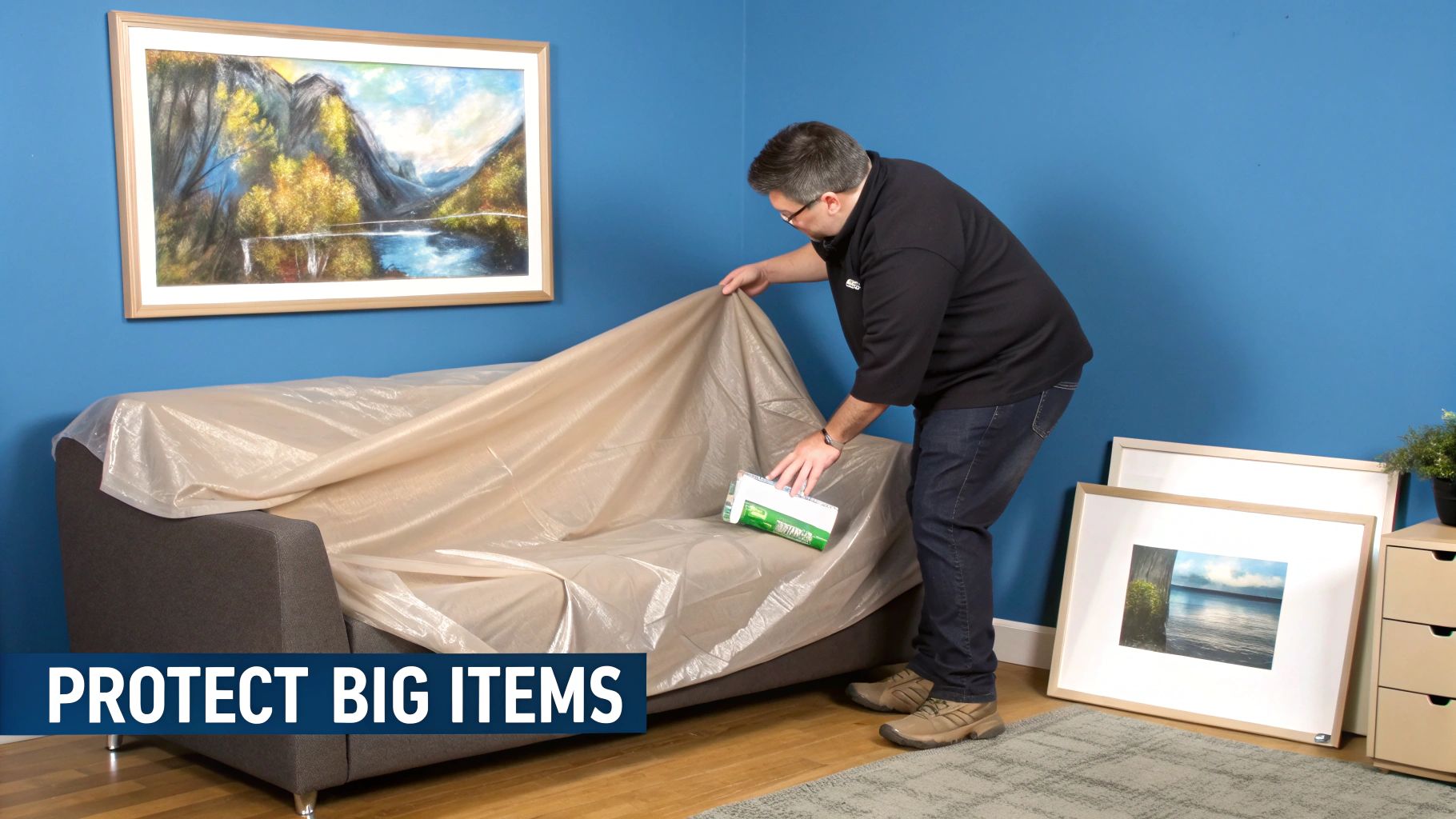
Protecting Large Furniture and Artwork
Big items like sofas, tables, and mattresses are magnets for rips, stains, and scuffs. At the same time, the corners of picture frames and mirrors are frustratingly easy to chip if they aren't properly shielded. This is where a few purpose-built materials become your best friends.
Your go-to kit for these items should include:
- Durable Furniture Covers: Think of these as purpose-built coats for your sofas, armchairs, and mattresses. These large, heavy-duty sheets provide a crucial barrier against dust, dirt, and moisture – essential for long-term storage.
- Corner Protectors: These small but mighty guards, usually made of tough cardboard or plastic, fit snugly over the corners of tables, bookcases, and framed art. They take the hit from accidental bumps that would otherwise cause dents and chips.
- Padded Moving Blankets: Absolutely non-negotiable for wooden furniture or anything with a delicate finish. Thick moving blankets provide a soft, cushioned layer of protection against scratches and impacts during transit.
Safeguarding Against Environmental Damage
Beyond physical knocks and scrapes, the environment itself can be a threat. Humidity is a silent enemy, especially for electronics, important documents, and fabrics stored for several months. Moisture in the air can lead to mould, mildew, and rust, causing permanent damage.
When it comes to long-term storage, what you can't see is often the biggest risk. Moisture absorbers are a simple, low-cost investment that provides essential protection against the slow, silent damage caused by humidity.
To fight back against damp, stock up on moisture absorbers like silica gel packets. Tucking a few of these inside boxes with electronics, photo albums, or important files can make a world of difference. They simply work by pulling moisture out of the air, keeping the inside of the box dry and stable.
Solutions for Business and Bulk Storage
For our business clients using Admiral’s Yard to store stock, managing bulk items brings its own unique challenges. The name of the game is keeping large quantities of inventory stable, secure, and protected for efficient management.
The absolute workhorse for this job is pallet wrap (you might know it as stretch film). This giant roll of thin, stretchy plastic is wrapped tightly around boxes stacked on a pallet. It does two things brilliantly: first, it binds all the boxes into a single, solid unit, stopping things from shifting or toppling over. Second, it adds an excellent layer of protection from dust and moisture, ensuring your inventory stays in perfect condition. It's a non-negotiable for handling bulk goods safely.
Your Packing Questions Answered
Even the most organised packer runs into questions. It’s only natural. To help you cross the finish line with confidence, we've gathered some of the most common queries we hear at our facilities and answered them with straightforward, practical advice.
How Do I Figure Out How Many Boxes I Need?
Estimating the right number of boxes can feel like a guessing game, but there's a pretty reliable rule of thumb we use in the storage industry. For a standard one-bedroom flat, you’re likely looking at somewhere between 20 and 40 boxes in a mix of sizes. If you’re packing up a two or three-bedroom house, that number jumps to between 50 and 100 boxes.
Of course, if you're a long-term resident or just have a lot of stuff, always lean towards the higher end of that range. Trust us, it’s far better to have a few extra boxes left over than to frantically hunt for more when you're only halfway through the kitchen.
Is It Okay to Reuse Old Boxes from Shops?
Absolutely! Grabbing free boxes from supermarkets or local community groups is a fantastic way to cut costs and be a bit greener. Just be sure to give them a thorough inspection before you start packing. You're looking for any tell-tale signs of weakness – tears, deep creases, or any water damage that could mean the box won't hold up.
For your own peace of mind, we always recommend using second-hand boxes for soft, non-fragile items like clothes, bedding, and cushions. When it comes to your delicate or valuable possessions, always invest in new, sturdy double-walled boxes. It's the best way to ensure they get the protection they deserve.
What’s the Single Biggest Packing Mistake People Make?
Hands down, the most common mistake we see is not filling boxes to the top. Any empty space—what we call 'void'—is an open invitation for your belongings to slide around, knock into each other, and break during transit. It's absolutely essential to fill every gap with cushioning, whether it's scrunched-up packing paper or some biodegradable air pillows.
Here's a simple trick: before you tape a box shut, give it a gentle shake. If you hear or feel anything shifting inside, pop it open and add more padding until everything feels snug and secure. This one small check can make all the difference when you unpack.
How Should I Get Rid of Packing Materials After My Move?
Once you’re all unpacked and settled in, the final job is dealing with the mountain of materials. Most cardboard boxes and paper can be flattened and put straight into your household recycling. For plastics like bubble wrap, it's always best to check your local council's website, as recycling rules can differ from one area to another.
Another great option is to pass your materials on. If your boxes are still in good shape, a quick post on a neighbourhood forum or social media group is a wonderful way to help someone else out and keep perfectly good supplies from ending up in a landfill.
Ready to get started with the right materials for packing? At Admiral's Yard Self Storage, we offer a range of high-quality supplies and secure, accessible storage units to make your move seamless. Find your perfect storage solution with us today!

