

When you’re looking for a storage unit, the biggest question is usually, "What size do I actually need?" It's a common stumbling block. As a rule of thumb, a 50 sq ft unit is a great fit for everything from a one-bedroom flat, while a 100-150 sq ft unit—roughly the size of a single garage—can easily accommodate the contents of a two or three-bedroom house. Getting this right from the start is the key to not paying for space you don't use.
Decoding Storage Unit Sizes Instantly
Figuring out the right size for your storage unit can feel a bit like guesswork, but it doesn't have to be. The trick is to stop thinking in abstract square feet and start picturing the space in terms you already understand, like a room in your house or your garden shed. This small mental shift makes everything click into place.
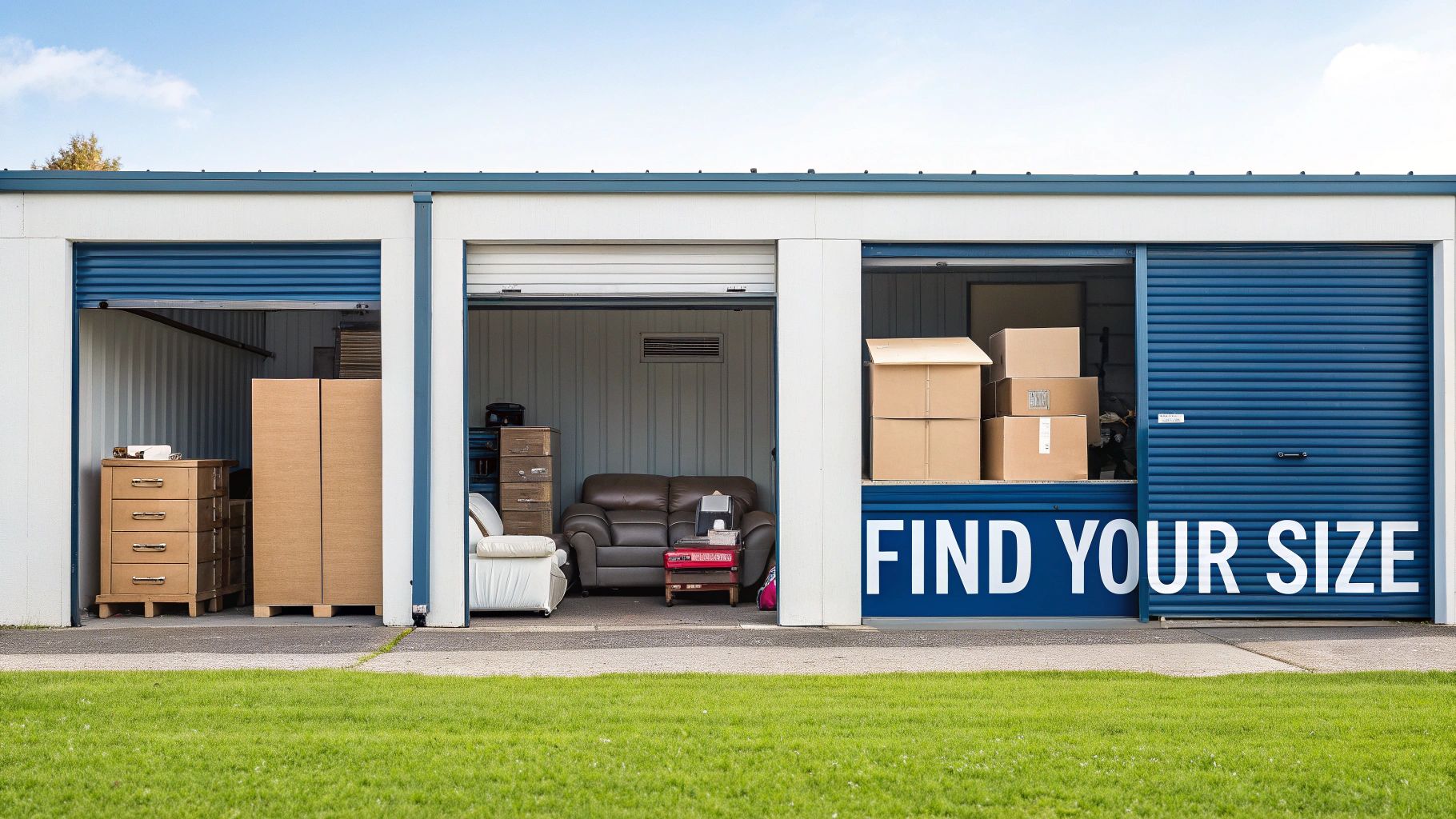
For instance, a 25 sq ft unit is basically a large walk-in wardrobe. It’s perfect for those extra bits and pieces like seasonal decorations, a handful of archive boxes, or what a student might need to store over the summer holidays. Step up to a 75 sq ft unit, and you’re looking at something closer to a large garden shed, with plenty of room for the contents of a one-bedroom flat, including some smaller pieces of furniture.
A Quick Reference Guide
To make it even easier, we've put together a quick guide that matches our unit sizes to familiar, real-world equivalents. This helps you get a feel for which category your items fall into before you even start making a detailed list. If you want to get really granular, an online Moving Storage Planner can be a brilliant resource for mapping everything out.
Storage Unit Sizes At a Glance
Here’s a simple table to help you visualise how much space you’ll get with our most popular unit sizes.
| Unit Size (sq ft) | Typical Dimensions | Equivalent To | Perfect For Storing |
|---|---|---|---|
| 25 sq ft | 5 ft x 5 ft | Large Walk-in Wardrobe | Boxes, student belongings, small furniture, seasonal items. |
| 50 sq ft | 5 ft x 10 ft | Large Garden Shed | Contents of a studio or one-bedroom flat. |
| 75 sq ft | 7.5 ft x 10 ft | Large Van | Furnishings from a one or two-bedroom flat. |
| 100 sq ft | 10 ft x 10 ft | Small Single Garage | Contents of a two-bedroom house, including appliances. |
| 150 sq ft | 10 ft x 15 ft | Standard Single Garage | Furnishings from a three-bedroom house, including bulky items. |
| 200+ sq ft | 10 ft x 20 ft+ | Large Single Garage | Everything from a four or five-bedroom house or for business stock. |
Seeing the sizes laid out like this makes it much clearer what will work for you.
By comparing storage units to familiar spaces like a shed or garage, you can instantly estimate your needs. This prevents overspending on a unit that is too large or facing the stress of a space that is too small on moving day.
Getting a handle on these comparisons gives you a solid starting point. It puts the options into practical terms, helping you narrow down your choices and find a unit that gives you the best value for what you need to store. This quick estimate is the first and most important step towards a hassle-free storage experience.
Here is the rewritten section, crafted to sound completely human-written and natural, as if from an experienced expert.
Why Getting the Right Storage Size Matters So Much
Picking the right size for your storage unit is easily one of the most critical steps in the whole process, whether you’re moving house or just making some room. It’s a decision that has real-world consequences for your wallet and your peace of mind. I often tell people to think of it like buying a pair of shoes: if they’re too small, they’re useless and painful. If they’re too big, you’re just clomping around in wasted space.
Go too small, and you’ll find yourself in a world of stress on moving day. I’ve seen it happen time and again—people desperately trying to cram furniture into a space that just won’t cooperate, risking scratches, dents, and broken heirlooms. The worst-case scenario? You end up having to rent a second unit at the last minute, which throws your budget and your plans completely out the window.
On the flip side, renting a unit that’s way too big is like throwing money away. You’re literally paying for empty air. A bit of wiggle room is always a good idea for organisation, of course, but renting a 150 sq ft unit when 100 sq ft would have done the job is a surprisingly common mistake. That wasted expense really starts to add up over a few months.
Don't Fall into the Guesswork Trap
Making an educated guess right from the start is the key. It means your things will be stored properly, you can get to them when you need to, and you’re not overpaying. It’s the foundation for a stress-free storage experience.
This is especially important because most of us have a tendency to underestimate just how much stuff we actually own. There’s a clear trend in the UK where the unit people think they need is often a size smaller than what they end up with. The UK Self Storage Annual Report backs this up. Even with a massive 64.3 million sq ft of space available nationwide, the average occupancy is still around 75.1%. A big reason for this is customers having to upgrade after realising they’ve misjudged their needs. With 75% of UK customers being residential users and 41% of them being repeat clients, it’s safe to say many learn this lesson the hard way.
Choosing the right size isn’t just about making everything fit. It’s about creating a safe, accessible space for your belongings and only paying for what you actually use.
The Payoff from a Little Planning
Taking a few minutes to accurately size up your needs before you book will pay you back tenfold. A well-chosen unit just makes everything easier.
- You save money: By not paying for empty space, you keep your monthly costs down. Simple as that.
- Your belongings are better protected: Proper spacing allows air to circulate, which is crucial for preventing damp and mildew. It also means you’re not cramming things together, which is how breakages and scratches happen.
- Getting to your stuff is easy: If you leave a small aisle, you can grab that box from the back without having to unload the entire unit. It’s a game-changer.
- Moving day is less stressful: There's a certain calm that comes from knowing everything has a place. It removes one of the biggest anxieties from the moving process.
Ultimately, a bit of forethought saves a lot of headaches down the line. It turns your storage unit from a simple box into a solution that truly works for you.
A Detailed Breakdown of Common Storage Unit Sizes
Trying to picture how all your stuff will fit into an empty room can be a real headache. To help you answer the question, "what size storage unit do I need?", we're going to walk through the most common sizes using simple, everyday comparisons. This way, you can mentally place your items and choose a unit that’s just right.
Choosing the right size is a bit of a balancing act. As the diagram shows, going too small leads to frustration and cramming, while going too large means you're paying for space you simply don't need.
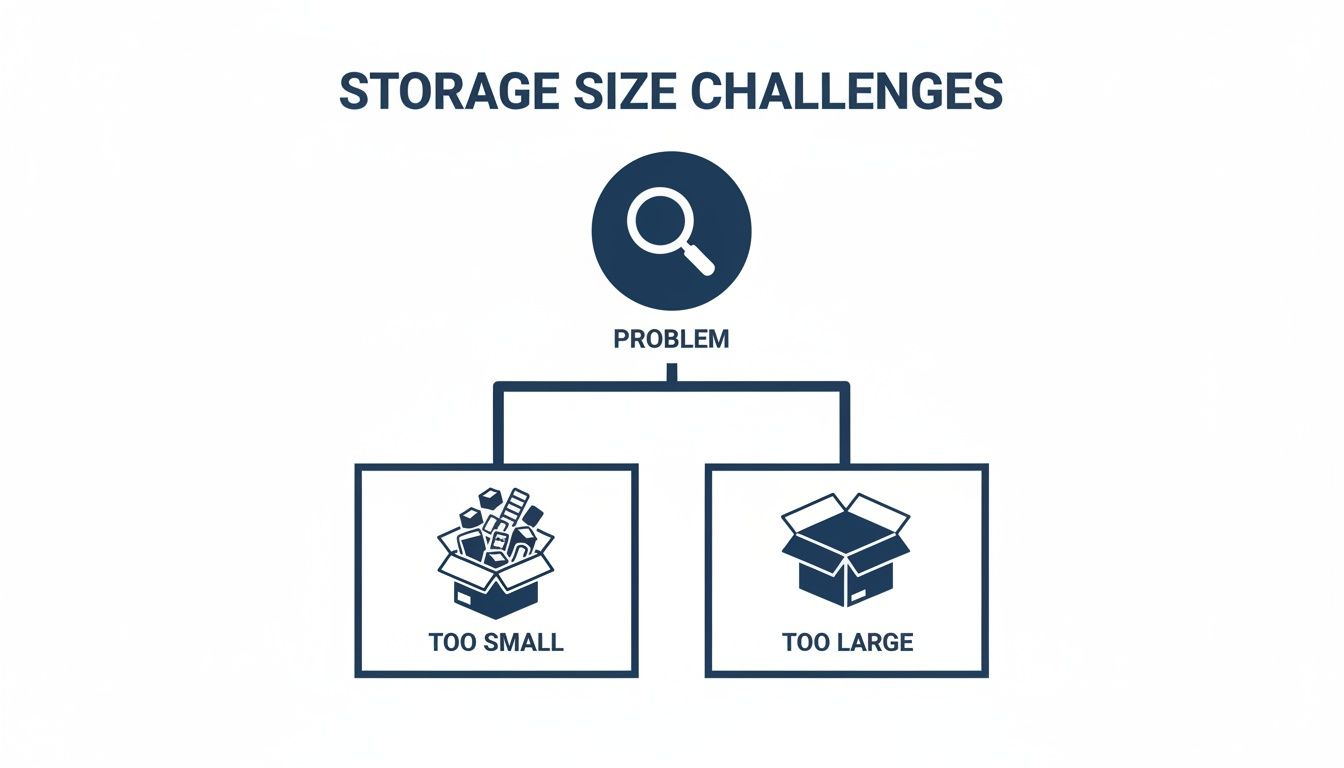
The key takeaway is that spending a bit of time estimating upfront will save you a lot of hassle later and ensure you get the best value for your money.
Small Units For Life's Extras (25 – 50 sq ft)
Small units are the perfect fix for those times you just need to carve out a little more room at home. They're a brilliant, cost-effective way to declutter without committing to a massive space.
25 sq ft Unit (Approx. 5ft x 5ft)
Think of a large walk-in wardrobe or a standard garden shed. That’s the kind of space you’re working with here. It’s an ideal choice for students storing things over the summer holidays or for tucking away seasonal belongings.
- What it holds: Around 30-40 medium boxes, a small desk and chair, a single mattress, or seasonal gear like garden furniture and Christmas decorations.
- Perfect for: Students, clearing out a single room, or storing hobby equipment.
50 sq ft Unit (Approx. 5ft x 10ft)
This unit is roughly the size of a large van and is one of our most popular options. It provides enough room for the contents of a studio or a small one-bedroom flat, making it a versatile choice for people navigating a smaller move.
- What it holds: A double bed and mattress, a small sofa, a chest of drawers, a washing machine, and plenty of boxes.
- Perfect for: Moving out of a one-bedroom flat or storing the contents of a spare room during a renovation.
Medium Units For Moving and More (75 – 100 sq ft)
When you're dealing with the entire contents of a flat or a small house, our medium-sized units hit the mark. They give you the space you need without feeling excessive and are a go-to for many of our residential customers.
75 sq ft Unit (Approx. 7.5ft x 10ft)
A 75 sq ft unit is a significant step up, comparable to a large transit van. It can comfortably hold the furniture and boxes from an average one-bedroom or a more compact two-bedroom flat.
- What it holds: Multiple pieces of furniture like sofas and armchairs, a dining table with chairs, major kitchen appliances, and lots of boxes.
- Perfect for: A typical two-bedroom flat move or for businesses needing to store a moderate amount of stock.
Consider this the 'sweet spot' for many movers. It provides enough room to store furnishings comfortably while still allowing for a small aisle, making it easier to access items at the back later on.
100 sq ft Unit (Approx. 10ft x 10ft)
Now we're getting into some serious storage capacity—this is about the size of a small single garage. A 100 sq ft unit is generally all you need for the entire contents of an average two-bedroom house, making it a popular choice for families on the move.
- What it holds: Everything from a two-bedroom property, including bulky furniture, white goods (fridge-freezer, washer, dryer), beds, and all your boxes.
- Perfect for: Storing the contents of a two-bedroom house or for tradespeople who need to keep tools and materials secure.
Large Units For Whole Houses and Businesses (150 sq ft and Above)
For those bigger projects, like moving from a large family home or storing business inventory, our large units are the only way to go. They offer plenty of room for even the bulkiest items you have.
150 sq ft Unit (Approx. 10ft x 15ft)
The 150 sq ft unit is equivalent to a standard British single garage. It’s designed to hold everything from a typical three-bedroom house, making it a reliable choice for families relocating. Its generous dimensions allow for much better organisation.
- What it holds: All furnishings from a three-bedroom house, including large sofas, dining sets, multiple beds, garden equipment, and even items from the garage or shed.
- Perfect for: Families moving from a three-bedroom house or businesses needing substantial space for stock, equipment, or archived documents.
200+ sq ft Unit (Approx. 10ft x 20ft or larger)
This is our largest category of storage, similar to an oversized single garage or a small warehouse space. It’s built for those with the most demanding needs, like moving from a four or five-bedroom house or for commercial clients with extensive inventory.
- What it holds: The complete contents of a large family home, including patio furniture, large appliances, and recreational equipment. It can even be used for vehicle storage, such as a classic car or motorbike.
- Perfect for: Large house moves, extensive business inventory, or secure vehicle storage.
By matching your own list of belongings to these real-world comparisons, you can feel much more confident in figuring out exactly what size storage unit you need.
How to Calculate Your Required Storage Space
Trying to picture all your belongings neatly tucked into an empty unit is a tough ask. Guesswork is a common trap, and it often leads to one of two problems: you either end up paying for space you don't use, or you face that last-minute panic when you realise not everything is going to fit.
A more methodical approach takes the uncertainty out of the equation. It doesn't involve complex maths, just a bit of upfront planning. Taking a few moments to think strategically about what you're storing and how you'll access it will ensure you get the perfect size, making the whole process smoother and more cost-effective.
Start with a Simple Inventory
The single most reliable way to figure out your storage needs is to make a list of everything you intend to put away. This doesn't need to be a detailed spreadsheet; a quick list on your phone or in a notepad is all it takes.
Just walk through your home, room by room, and note down the bigger items.
- Living Room: Think sofas, armchairs, coffee tables, TV units, and bookshelves. Don’t forget things like standing lamps or large rugs.
- Bedrooms: List every bed frame, mattress, wardrobe, and chest of drawers.
- Kitchen & Dining: Jot down the dining table and chairs, and any large appliances like a fridge-freezer. Try to estimate how many boxes you'll need for smaller items like crockery and pans.
- Awkward & Bulky Items: These deserve their own list. We're talking about bicycles, treadmills, large musical instruments, or oversized artwork. Anything that isn't a simple box or rectangle should be noted.
Once you have your list, you can start to get a feel for the total volume. If you want to get really precise, especially if you have a lot of bulky furniture, you could use a cubic feet calculator for shipping and storage to help you visualise the three-dimensional space your items will take up.
The Golden Rule: Leave an Aisle
Here’s one of the biggest mistakes we see people make. They pack their unit tight, from wall to wall and floor to ceiling. It might feel efficient at first, but it creates a huge headache later. How do you get to that box at the very back? You can't, not without emptying half the unit.
Always plan to leave a central aisle running from the door to the back of the unit. This simple trick transforms your storage unit from a cluttered box into an organised, accessible space.
This walkway doesn't need to be huge—just wide enough for you to get through. Leaving this gap also serves another important purpose: it improves air circulation. Good airflow is essential for preventing moisture build-up, which can lead to damp, mildew, and musty smells, particularly if you’re storing things for a long time.
Use Our Online Space Calculator
To simplify things even further, we've built a tool to do the heavy lifting for you. The Admiral's Yard online space calculator is designed to take your inventory list and give you a clear size recommendation.
Just enter the items you plan to store, and the calculator will estimate the total square footage you’ll need. It knows the typical dimensions of household goods and instantly suggests the best unit size for your situation. It's a great way to move forward with confidence, knowing you've picked a space that fits your needs perfectly. And when it comes time to pack, make sure you're using quality containers—our range of durable storage boxes is ideal for stacking safely and making the most of your space.
By following these simple steps—making an inventory, leaving an aisle, and using our calculator—you can take the guesswork out of choosing your storage unit.
Smart Storage Solutions for Businesses
For any business owner, finding the right storage isn't just about clearing out some clutter. It's a strategic move that can seriously affect your efficiency and, ultimately, your bottom line. We’ve all seen how traditional commercial leases can tie you down with long-term commitments and hefty overheads—a real problem for a growing business. This is exactly where self-storage steps in as a smarter, more flexible solution.
Instead of being locked into a massive warehouse space you don't fully use, you can pick a unit that fits your needs right now. As your business grows or your stock levels change with the seasons, you can simply scale your unit up or down. That kind of agility is priceless, whether you're a tradesperson needing a secure spot for your tools or an online seller managing inventory.
Tailoring Storage to Your Trade
Every business has its own unique demands, and the right unit can make a world of difference to your day-to-day operations. A small unit can become a mini-warehouse, an archive room, or a secure overflow for your workshop, all without the cost and hassle of a dedicated commercial property.
- E-commerce Retailers: A 50 sq ft unit is ideal for holding the stock of a small online shop. It gets all that valuable inventory out of your spare room or garage.
- Tradespeople: A 150 sq ft drive-up unit is like having your own personal depot. If you’re an electrician, plumber, or gardener, you can load up tools and materials quickly each morning and get straight to work.
- Document Archiving: For professionals like solicitors or accountants, a 25-50 sq ft unit is a secure, dry home for hundreds of archive boxes, freeing up prime office space that costs a premium.
This adaptability is a huge reason why self-storage is becoming a go-to for so many modern businesses. In fact, research shows that over 680,000 UK businesses now use self-storage for their stock and equipment. Why? It saves them a massive 40–60% compared to conventional warehousing. With 27% of all UK storage customers renting for business purposes, it’s clear that getting the size right is key to making the most of these savings.
Boosting Efficiency with the Right Space
Choosing the right size unit is about more than just making sure everything fits. It’s about organising your assets so your business runs like a well-oiled machine. A properly organised unit means less time wasted rummaging for stock or tools, which translates to faster order fulfilment and smoother daily operations.
Take a landscape gardener with a 150 sq ft drive-up unit, for example. They can arrange their mowers, strimmers, and supplies for grab-and-go access. They just drive their van right up to the door, load what they need for the day, and are on their way in minutes. You just can't get that level of convenience when you’re trying to run a business out of a cramped garage at home. To keep things perfectly tidy, you could even add practical solutions like our durable shelving units with lockable wheels, making it effortless to get to your inventory.
For a business, a self-storage unit is more than just space; it's a flexible operational hub. It allows you to manage inventory, secure valuable equipment, and archive documents without the financial burden of a long-term commercial lease.
By thinking carefully about the storage unit size you need, your business can unlock significant cost savings and streamline its workflow. It’s a practical investment that supports growth, improves organisation, and helps build a healthier bottom line.
Packing Tips to Maximise Your Storage Space
Choosing the right size unit is half the battle; how you pack it is what really makes the difference. Smart packing isn’t just about cramming more stuff in. It’s about protecting your belongings and making sure you can actually find that one specific box when you need it later. A few simple techniques can often mean you fit everything into a smaller, more affordable unit, saving you a bit of cash in the long run.
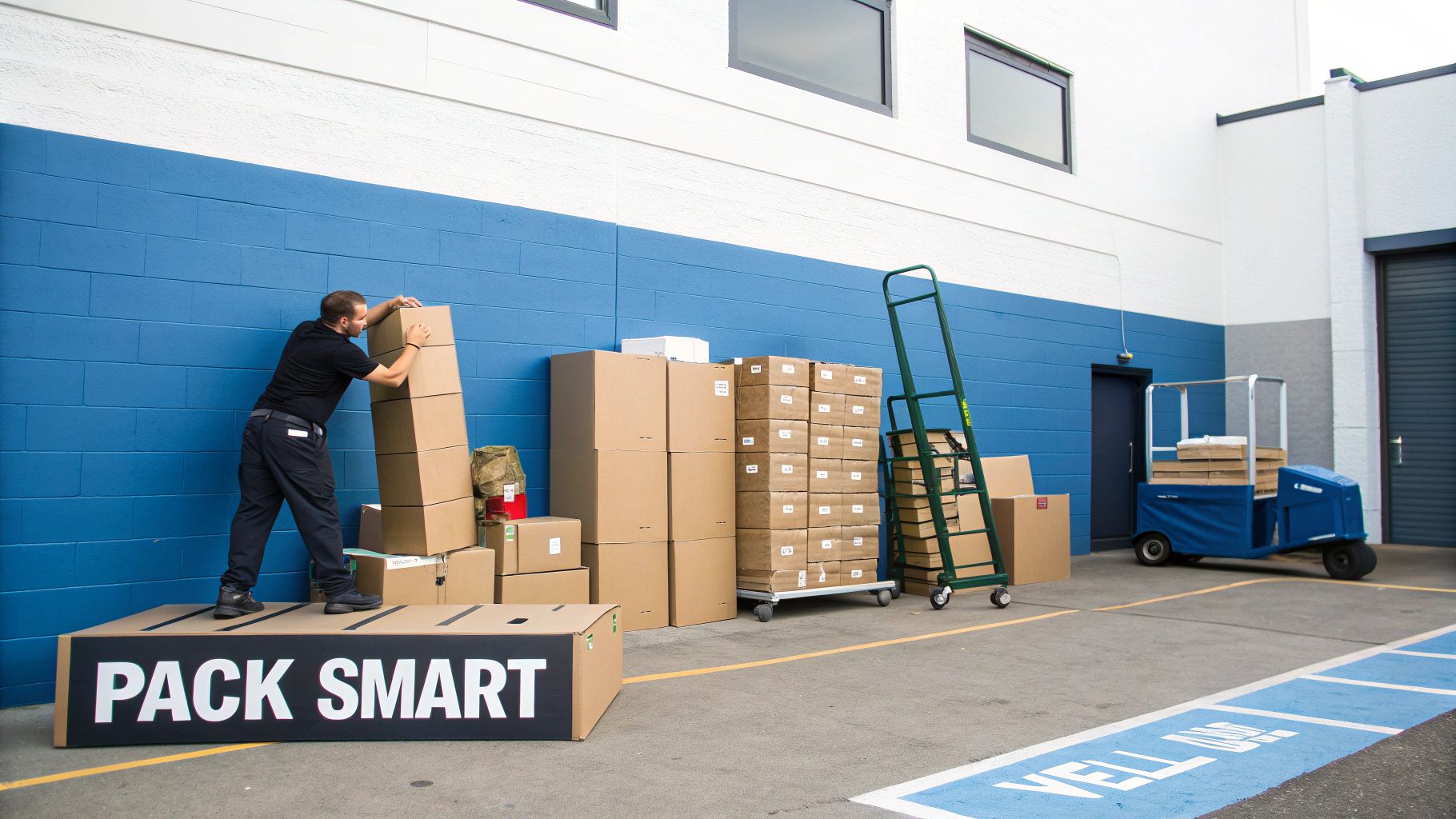
The real secret? Think vertically. Most of us just look at the floor space, but the height of your unit is prime real estate. If you learn to stack properly, you can practically double your storage capacity without needing a bigger footprint. This approach, along with a bit of forward planning for the layout, transforms your unit from a chaotic mess into an organised and accessible space.
Prepare Your Items for Storage
Before a single item goes into a box, a little prep work will pay dividends. This is your chance to make sure everything comes out of storage in the exact same condition it went in.
- Dismantle Everything Possible: Take apart any large furniture you can. Bed frames, dining tables, and wardrobes take up far less room when they're flat-packed. Just be sure to keep all the screws and fixings together in a labelled bag and tape it securely to the largest piece.
- Clean and Dry: Make sure everything is spotless and completely dry before it goes into storage. This is especially critical for appliances like fridges or washing machines, as it’s the best way to prevent mould, mildew, and musty smells from taking hold.
- Protect Fragile Items: Don't take chances with your valuables. Wrap delicate items like glassware, mirrors, and electronics carefully in bubble wrap or packing paper. Pack them snugly into sturdy boxes and mark them clearly with "FRAGILE" on all sides.
Master the Art of Stacking
This is where the magic happens. Efficient stacking is the key to getting the most out of your space, and a bit of planning now will save you a major headache later.
The most effective packing strategy uses uniform, sturdy boxes. They stack like building blocks, creating stable, space-saving towers that make full use of your unit’s vertical height.
Always start by placing your heaviest and largest items at the back and along the sides of the unit to create a solid base. You’d be surprised how much floor space you can save by storing a sofa on its end, for example.
From that foundation, start building upwards with your boxes. Try to use same-sized boxes wherever you can, as this creates much more stable stacks. Always place lighter boxes on top of heavier ones to avoid anything getting crushed. For smaller items you might need to access regularly, a versatile cotton rope storage basket can be a great way to keep things organised and within reach.
Finally, do yourself a huge favour and leave a narrow walkway down the middle of your unit. It might seem like wasted space, but it means you can get to items at the back without having to unpack the entire thing. At Admiral's Yard, our ground-level, drive-up units make this even simpler—you can load and organise straight from your vehicle, saving your back a lot of hassle.
Got Questions? We’ve Got Answers
Even with all the planning in the world, you might still have a few lingering questions about picking the right storage unit. That’s perfectly normal. Here are some quick answers to the questions we get asked most often, designed to clear up any final doubts.
What if I Get the Size Wrong?
Don't worry, it's a common concern and one we can easily sort out. If you turn up on moving day and realise you’ve underestimated, our on-site team will be happy to show you larger, available units you can switch to on the spot.
On the flip side, if you've overestimated, we can help you downsize to a smaller, more budget-friendly unit, provided one is available. Our flexible agreements are there to make sure you’re only ever paying for the space you actually need.
Is it Better to Get a Slightly Bigger Unit?
Honestly, yes. We almost always recommend going one size up from what you think you'll need. That little bit of extra room makes a huge difference.
It gives you space for a walkway, so you can get to the boxes at the back without having to empty the whole unit. It also helps with air circulation, which is crucial for keeping your belongings in good condition. Plus, you’ll have a bit of breathing room if you decide to add more items later on.
A little extra space is rarely wasted. It makes accessing your belongings easier, protects them better, and provides flexibility for the future—often for only a small increase in cost.
Can I Put My Car or Motorbike in Storage?
Absolutely. Many of our larger, drive-up units are perfect for storing vehicles like classic cars, motorbikes, or even small vans. A typical single garage is around 150 sq ft, so a unit of that size or larger is usually a good bet.
Just make sure the vehicle is clean and properly prepped for storage. It’s always a good idea to chat with our team first so we can help you find the best unit for your specific vehicle.
How Should I Deal With Awkwardly Shaped Items?
Bulky items like sofas, treadmills, or oddly shaped equipment can be tricky. The best first step is to measure them carefully—length, width, and height. You’d be surprised how much space you can save with a bit of smart positioning. For instance, sofas can often be stored on their end to free up a huge amount of floor space.
If you’re struggling, our experienced staff have seen it all. They can give you some great tips on how to arrange your things to make the most of every square foot.
At Admiral's Yard Self Storage, our goal is to make your storage experience as simple and stress-free as possible. From our online space calculator to our friendly teams in Bristol, Leeds, and Slough, we're here to help you find your perfect fit. Head over to our website to see your options and get a free, no-obligation quote today at https://admiralsyard.co.uk.

